
 DogExpress

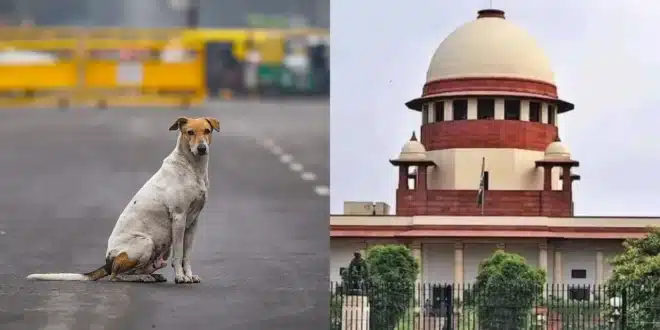
The Supreme Court of India (SC) has ordered all states and Union Territories to remove stray dogs from public places, such as schools, hospitals, bus stands, sports complexes, and railway stations. The dogs are to be moved to shelters after sterilization and vaccination.
What the Order Says
On November 7, a Bench of Justices Vikram Nath, Sandeep Mehta, and N. V. Anjaria issued the order. They said that picked-up stray dogs must not be returned to the same location.
The court said municipal bodies are responsible for removing stray dogs. Each listed institution must have a nodal officer to ensure cleanliness and stop stray dogs from entering or staying on the premises.
Timeline & Evolution of the Orders
This latest order changes earlier SC rulings. On August 11, the court told Delhi-NCR authorities to collect stray dogs and move them to shelters or pounds. It said that no stray should be returned to the same area. This was different from the Animal Birth Control (Dogs) Rules, 2023 (ABC Rules), which used a catch-sterilize-vaccinate-release (CSV) model.
On August 22, the court changed its position again. It kept shelter infrastructure as a requirement, but said the CSV system—sterilize, deworm, vaccinate, and release—should continue, except for rabid or aggressive dogs. These dogs must be housed separately and not released.
The court also limited the street feeding of stray dogs. Municipal bodies must set feeding spots in each ward. Feeding outside these designated spots in public places may result in legal action.
Importantly, while earlier orders focused on the Delhi-NCR region, the latest directive extends the scope to all states and Union Territories across India.
Why This Matters
Stray dogs are a public health and safety problem in India. The court seeks a balance between animal welfare and human safety. Stray dogs are part of the urban ecosystem, and many people care for them. Yet dog bites and rabies continue, affecting children and the elderly. The court said, “No sentiments should be involved in this entire exercise.”
Institutions must appoint nodal officers, and municipalities are accountable for them. The court wants a structured system. Keeping all dogs off the streets recognizes CSV limits, especially where rabies or aggression is found. Feeding zones aim to manage human-animal interactions safely and closely.
Key Challenges Ahead
- Implementation across states: Many municipalities may face resource constraints, such as limited shelter capacity, staff availability, and logistical constraints in implementing the removal-sterilization-vaccination-shelter model.
- Shelter capacity and humane conditions: Meeting targets for building shelters and ensuring they maintain welfare standards will be a major challenge.
- Balancing animal welfare and public safety: While the CSV model supports humane control of stray dogs, removing them without proper rehabilitation may raise welfare and ecological concerns.
- Feeding-zone compliance: Success depends on coordination among municipal authorities, resident welfare associations, feeders, and NGOs.
- Monitoring and transparency: Authorities must ensure that sterilization and vaccination records are maintained and that shelters are not overcrowded or mismanaged.
Looking Ahead
The Supreme Court’s order makes stray-dog control a top public priority. Municipalities must remove stray dogs from public spaces and not return them. States and UTs must match their actions to the directive and the ABC Rules.
If carried out well, the order may cut dog-bite incidents and stray hazards, especially in sensitive areas. It aims for a humane system to control numbers. Success will require the cooperation of local authorities, animal groups, and the public.
Citizens will see changes. Strays may be cleared from institutions. New feeding zones may be set up. Rules on street dogs will likely get stricter.















 in Chandigarh, India.