






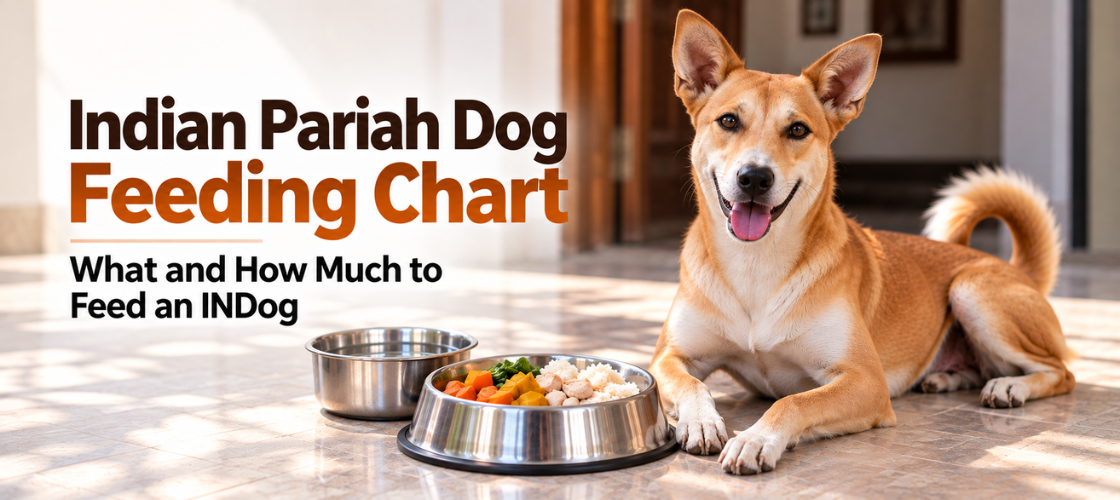
The Indian Pariah, or INDog, has been feeding itself on Indian food for thousands of years. That history matters for how you feed one in a home environment. This is not a breed that evolved alongside grain-free premium kibble — it evolved alongside Indian food waste, small game, and whatever opportunistic nutrition the subcontinent offered. That gives the INDog a digestive resilience that most imported breeds do not have, but it also means the breed’s nutritional requirements are calibrated differently from a Labrador or a German Shepherd developed in a different food environment entirely.
This Indian Pariah dog feeding chart is built around what actually works for the breed in practice, from home-cooked meals to commercial food, with realistic portions by age and weight.
Why the INDog Needs a Different Nutritional Framework
The Indian Pariah’s digestive system has adapted over millennia to a highly varied diet with lower average protein density than what most commercial dog foods assume. According to research published in Nature (https://www.nature.com/articles/nature11837), Indian dog populations show specific genetic adaptations for starch digestion that differ from wolf ancestors and some other domestic dog breeds — an adaptation consistent with thousands of years of coevolution with agricultural India.
This does not mean INDogs can or should live on starch. It means they tolerate a higher carbohydrate proportion than some breeds without the digestive issues that a Husky or a Doberman might develop on the same diet. What the INDog still needs: adequate protein, appropriate fat, and enough total calories for their size and activity level.
Indian Pariah Dog Feeding Chart by Age
Puppy Stage: 2 Months to 9 Months
| Age | Daily Meals | Approx. Daily Quantity (Dry Food Equivalent) |
| 2 to 3 months | 4 meals | 80 to 120g |
| 3 to 6 months | 3 meals | 120 to 180g |
| 6 to 9 months | 3 meals | 160 to 220g |
INDog puppies, particularly those adopted from street litters, often have uncertain ages. If you’re estimating, look at teeth development — a puppy with all milk teeth present is typically under 12 weeks, and permanent teeth begin appearing at around 3 to 4 months.
Adult Stage: 9 Months to 7 Years
| Weight of Dog | Daily Dry Food (Moderate Activity) |
| 12 to 16 kg | 180 to 230g |
| 16 to 20 kg | 220 to 270g |
| 20 to 25 kg | 260 to 310g |
INDogs are medium-sized dogs, typically 15 to 22kg for most adults. Street-origin dogs that have had free-roaming lifestyles are often more active than home pets of the same breed and may need the higher end of the range.
Senior Stage: 7 Years and Above
| Age | Daily Dry Food | Notes |
| 7 to 10 years | 180 to 230g | Reduce if activity has declined significantly |
| 10+ years | 150 to 200g | Monitor weight closely; add joint support |
INDogs often live to 13 to 15 years in good health, longer than most comparably sized imported breeds. Senior dietary adjustments are about maintaining lean weight and supporting joint health rather than managing the breed-specific conditions that make senior care complex in dogs like Dobermans or Boxers.
Home-Cooked Meals: The Practical INDog Diet
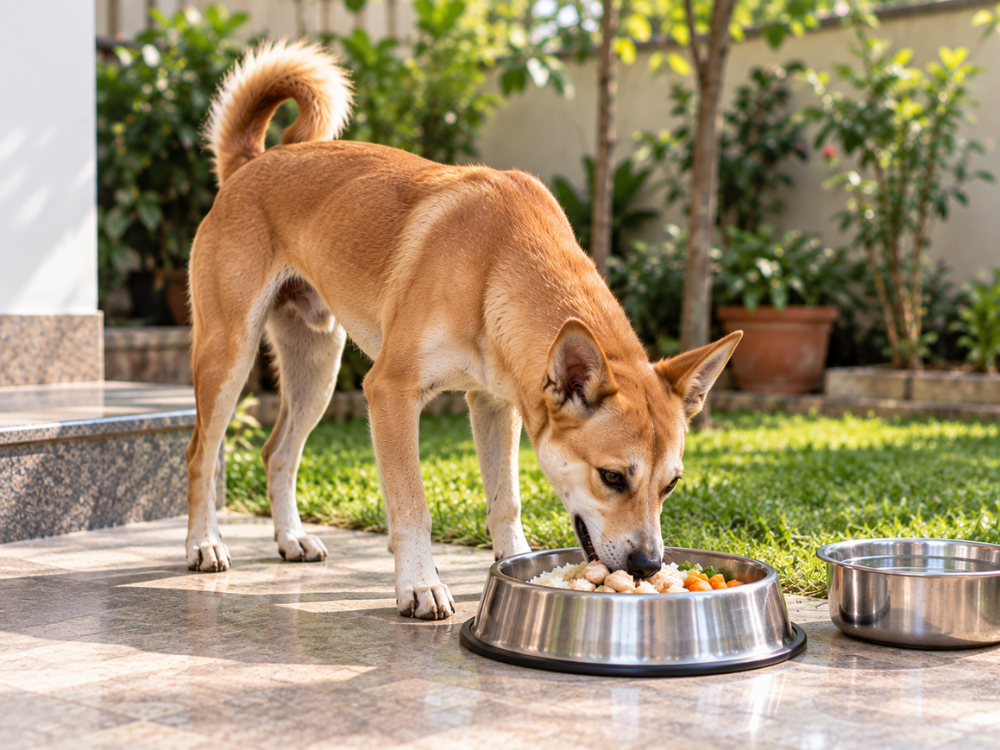
Most adopted INDog owners feed home-cooked food, and the breed handles this particularly well. A working daily meal structure for an adult INDog in the 16 to 20kg range:
- Protein (35 to 45%): Boiled chicken, eggs (1 to 2 per day), fish (rohu, surmai, sardine). Cooked lentils work as a partial protein source and are tolerated better by INDogs than by many imported breeds. Plain dal (no tadka) in small amounts is acceptable.
- Carbohydrates (35 to 45%): Rice is the default. The INDog’s genetic starch adaptation means rice is well-digested and provides stable energy. Sweet potato, roti in small amounts, and cooked oats occasionally work too.
- Vegetables (15 to 20%): Pumpkin, carrots, spinach, beans, beetroot. No onion, garlic, or grapes.
- Fat: A teaspoon of coconut oil 3 to 4 times a week. A fish oil capsule for omega-3.
The practical advantage of the INDog’s adaptability: you do not need to prepare a separate elaborate meal. A portion of plain home-cooked rice and chicken with some vegetables is a genuinely adequate meal for this breed, adjusted for size.
Commercial Kibble for INDogs
Commercial food works well for INDogs and provides nutritional completeness without the planning that home cooking requires. A mid-range Indian commercial food is adequate for most INDogs.
Recommended: Purepet Adult Dry Dog Food 10kg
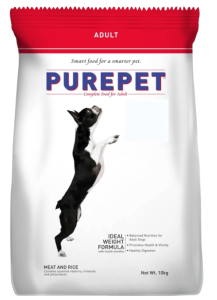
Purepet is practical for INDog owners because the price point makes the daily feeding cost genuinely affordable for a breed that often enters homes through adoption rather than planned purchase, and the protein and fat balance is appropriate for the breed’s medium-energy profile.
What to Avoid
The standard exclusions apply: onion and garlic in any form, grapes and raisins, chocolate, and cooked bones that splinter. For INDogs specifically, heavily spiced food is worth flagging because these dogs are often around household cooking and may receive table scraps that include tadka-based preparations. Plain, unseasoned components of Indian cooking are generally safe; the spiced final dish is not.
Street-adopted INDogs may initially have parasites that affect appetite and digestion regardless of what you’re feeding. A deworming cycle before or immediately upon adoption is essential.
Feeding Rescued and Newly Adopted INDogs
A dog coming from the street is often accustomed to eating irregularly and may initially eat very fast or seem anxious around food. Feed at consistent times from day one, in a quiet spot away from other household activity. Most INDogs regulate their eating behaviour within 2 to 3 weeks once they understand that meals are predictable and regular.
Do not change the diet dramatically in the first week. If the shelter or rescue provided information on what the dog was eating, maintain that and transition gradually over 10 days to the diet you intend to feed long-term.
Conclusion
The Indian Pariah dog feeding chart is, in practice, less complicated than feeding most imported breeds. Adequate protein, rice-based carbohydrates, some vegetables, and a consistent schedule is the foundation the INDog thrives on. If you’ve adopted recently, get the deworming done first and give the dog 3 to 4 weeks to settle into a regular feeding rhythm before evaluating whether portions need adjusting.
FAQs
My adopted INDog eats very fast and seems anxious about food. Will this settle down?
Usually yes. Street dogs eat fast because food has historically been unpredictable and competed for. Once the dog understands meals are regular and uncontested, the anxiety typically reduces within 3 to 4 weeks. Feeding in a quiet, consistent spot at the same times daily accelerates this adjustment.
Can I feed my INDog plain dal and rice as a regular meal?
Plain, unseasoned cooked dal and rice provides reasonable carbohydrates and some protein. It is not a complete diet on its own because it is short on fat and micronutrients, but as part of a varied home-cooked diet that also includes eggs, chicken, or fish, it works well.
Does an INDog need supplements?
Generally not if fed a balanced home-cooked diet that includes protein, fat, and vegetables. A fish oil capsule for omega-3 is a low-cost addition that supports coat and joint health. For senior INDogs over 8 years, a glucosamine supplement is worth discussing with your vet.
How do I know if my INDog is a healthy weight?
The rib test works for INDogs the same as any breed — feel the ribcage with light pressure and you should feel each rib with a thin muscle covering. INDogs tend toward a lean, athletic build and can look underweight to owners accustomed to heavier-set breeds. If the ribs are palpable but not visible, and the dog has energy and a healthy coat, the weight is likely appropriate.

 October 1, 2026