






Feeding a Boxer well is both simpler and more demanding than feeding most medium breeds. Simpler because the Boxer’s needs are straightforward — high protein, controlled fat, adequate calcium during growth, and consistent meal timing. More demanding because this breed burns calories at a rate that surprises owners who’ve only kept lower-energy dogs, and because the Boxer’s deep chest makes bloat a genuine risk that the feeding structure needs to account for.
This Boxer feeding chart is built around those specific realities, with portions by age, food choices that work in India, and the feeding habits that keep this athletic breed in the condition it’s supposed to be in.
What Makes Boxer Nutrition Different From Most Breeds
Boxers are a working-dog breed despite being kept primarily as family companions in India. Their muscle mass, energy level, and metabolic rate are comparable to other athletic breeds like the Doberman or the German Shepherd.
Gastric dilatation-volvulus (bloat) kills more Boxers globally than almost any other non-disease cause. The condition is associated with large single meals, eating too fast, and vigorous exercise within an hour of eating. According to Purdue University’s Veterinary Teaching Hospital (https://vet.purdue.edu/pcop/bloat.php), large and deep-chested breeds like Boxers are at significantly higher risk for bloat than other breeds, and feeding management is one of the most actionable preventive measures available.
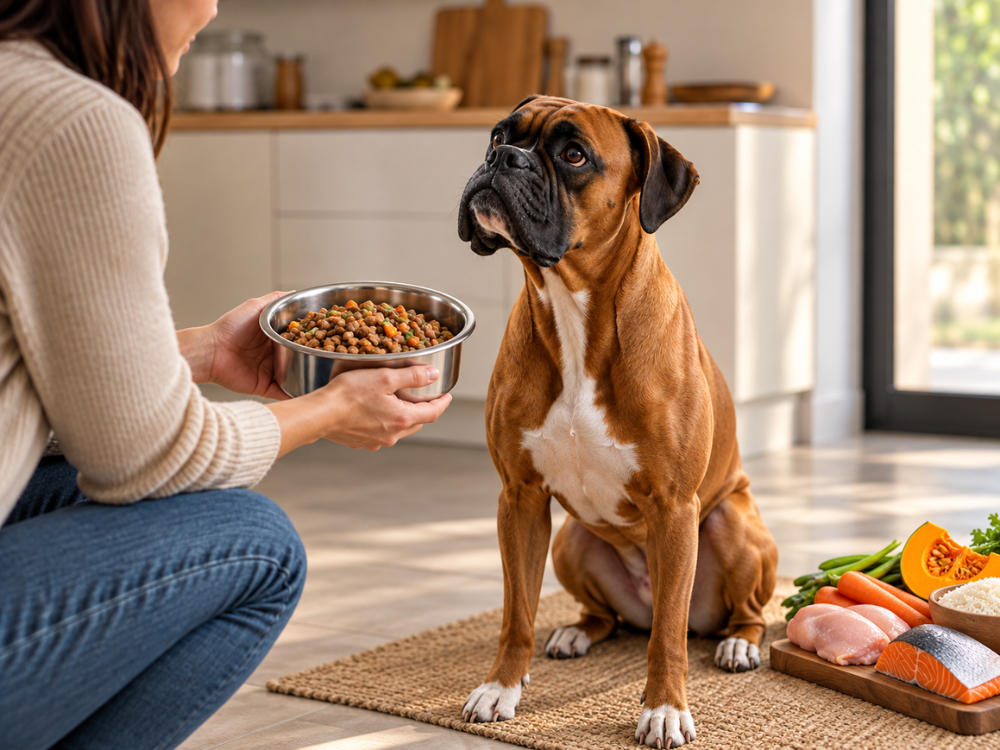
Boxer Feeding Chart by Age
Puppy Stage: 2 Months to 12 Months
| Age | Daily Meals | Approx. Daily Quantity (Dry Food) |
| 2 to 3 months | 4 meals | 180 to 240g |
| 3 to 6 months | 3 meals | 240 to 320g |
| 6 to 9 months | 3 meals | 300 to 380g |
| 9 to 12 months | 2 to 3 meals | 360 to 430g |
Boxer puppies are enthusiastic, chaotic eaters from the start. A slow feeder bowl during the puppy phase reduces air ingestion (a bloat risk factor) and extends meal duration, which is also better for digestion.
Adult Stage: 1 Year to 7 Years
| Weight of Dog | Daily Dry Food (Moderate Activity) | Daily Dry Food (High Activity) |
| 22 to 27 kg | 320 to 380g | 390 to 450g |
| 27 to 32 kg | 370 to 430g | 440 to 510g |
| 32 to 36 kg | 410 to 470g | 480 to 550g |
Most Indian Boxers fall in the 25 to 32kg range. Female Boxers tend toward the lower end, males toward the higher. If your dog is spayed or neutered, use the lower end of the moderate-activity range.
Senior Stage: 7 Years and Above
| Age | Daily Dry Food | Notes |
| 7 to 9 years | 300 to 360g | Watch for cardiac signs; reduce if activity declines |
| 9+ years | 260 to 320g | Senior formula recommended; heart-supporting nutrients |
Boxer cardiomyopathy is a breed-specific cardiac condition that often begins showing signs between ages 5 and 8. A senior Boxer whose appetite has changed, who tires faster on walks, or who has irregular energy levels should be assessed by a vet rather than having food adjusted independently.
What to Feed a Boxer in India
Kibble
A quality large-breed adult kibble with at least 22 to 25% protein is the practical baseline for most Indian Boxers. Look for food where a named animal protein is the first listed ingredient. Grain-inclusive formulas are generally preferable for Boxers given the ongoing research interest in potential links between grain-free diets and cardiomyopathy in predisposed breeds.
Home-Cooked Meals
A practical daily home-cooked structure for an adult Boxer:
- Protein (42 to 48%): Boiled chicken, eggs (2 per day is reasonable for an active adult), fish like rohu. Lean mutton occasionally for variety.
- Carbohydrates (32 to 38%): Rice is the most digestible option. Some sweet potato adds fibre without significantly affecting the protein-to-carb balance.
- Vegetables (15 to 20%): Pumpkin, carrots, spinach, beans. No onion, garlic, or grapes.
- Fat: Fish oil capsule daily. A teaspoon of coconut oil twice a week for coat health.
A 30kg Boxer on home-cooked food needs roughly 650 to 800g of prepared food per day, split across two meals. Owners accustomed to kibble are often surprised by the volume.
Recommended: HI Focus 4L Smart Automatic Pet Feeder with HD Camera
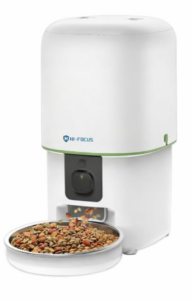
Boxers that eat twice daily at consistent times have more stable digestion and lower bloat risk than dogs fed variably throughout the day. An automatic feeder removes the ‘did you feed him’ variable in households where more than one person manages the dog’s care. The camera confirmation is particularly useful for monitoring how quickly a Boxer eats — a dog that finishes a meal in under 30 seconds is eating too fast regardless of portion size.
Bloat Prevention in Practice
- Two meals per day, not one. A single large meal is one of the clearest bloat risk factors in large deep-chested breeds.
- No vigorous exercise for at least 1 hour after eating. Post-dinner evening play sessions need to wait.
- Slow feeder bowls consistently reduce the rapid eating associated with air ingestion.
- Watch for signs: a Boxer with a distended abdomen, attempting to vomit without producing anything, or showing extreme restlessness after eating needs emergency veterinary attention. Bloat is fatal within hours if untreated.
India-Specific Feeding Notes
Boxers struggle with India’s summer heat more than many breeds. The short nose reduces their cooling capacity — they pant less efficiently than long-nosed breeds. Feeding during the cooler parts of the day (early morning and after 7pm) reduces heat-related appetite suppression.
During monsoon, keep food and water bowls in dry, clean areas. Boxer immune systems, while generally robust, are susceptible to the gastrointestinal infections that contaminated water and food bowls in humid conditions can cause.
Conclusion
A consistent Boxer feeding chart that accounts for two meals a day, appropriate portion sizes for the dog’s actual weight and activity level, and the bloat prevention habits this breed needs is straightforward to maintain once established. The structure matters as much as the food itself for this breed. If you’re adding a Boxer to your household, get the twice-daily meal routine and the post-meal rest habit in place before the dog arrives, and you’ll prevent the most serious dietary risk the breed faces.
FAQs
My Boxer eats extremely fast. Should I be worried?
Yes, rapid eating is a risk factor for bloat in this breed. A slow feeder bowl, spreading kibble on a flat tray rather than putting it in a deep bowl, or dividing each of the two daily meals into two portions served 15 minutes apart are all practical solutions.
Can I feed my Boxer chicken and rice at every meal?
Chicken and rice works as a base, but plain boiled white meat chicken is actually quite low in fat. A Boxer on only chicken and rice without any added fat source or supplementation will likely develop a dull coat and lower energy over time. Add a fat source and rotate in fish or egg for nutritional variety.
My Boxer does not seem interested in food in summer. Is this normal?
Yes, appetite suppression in summer is common for Boxers given their limited ability to regulate temperature through panting. Feed during cooler hours and ensure the feeding area is ventilated.
At what age should I switch my Boxer from puppy to adult food?
12 months is appropriate for Boxers, who are a medium-large breed that matures somewhat faster than giant breeds. Switching at this point ends the higher caloric density of puppy food at the right time.

 October 14, 2026