






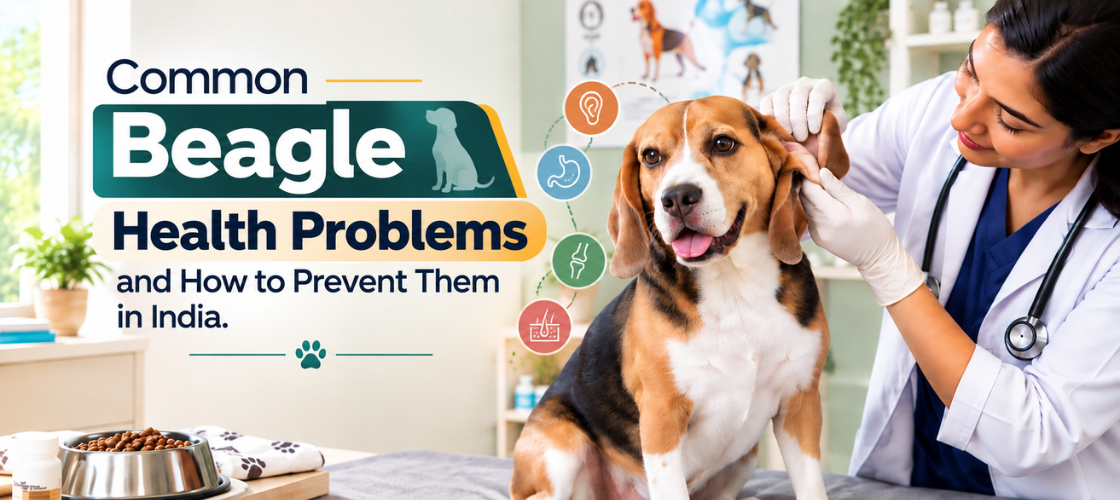
Beagles are generally a healthy, hardy breed with a good lifespan, but generally healthy does not mean problem-free. The breed has a handful of specific health vulnerabilities that show up with enough regularity that Indian Beagle owners are better off knowing about them before they become problems than after. Some are preventable through management. Some require early detection to treat effectively.
This guide covers the Beagle health issues most relevant to dogs living in India, with practical prevention and detection guidance.
Obesity: The Most Common and Most Preventable Problem
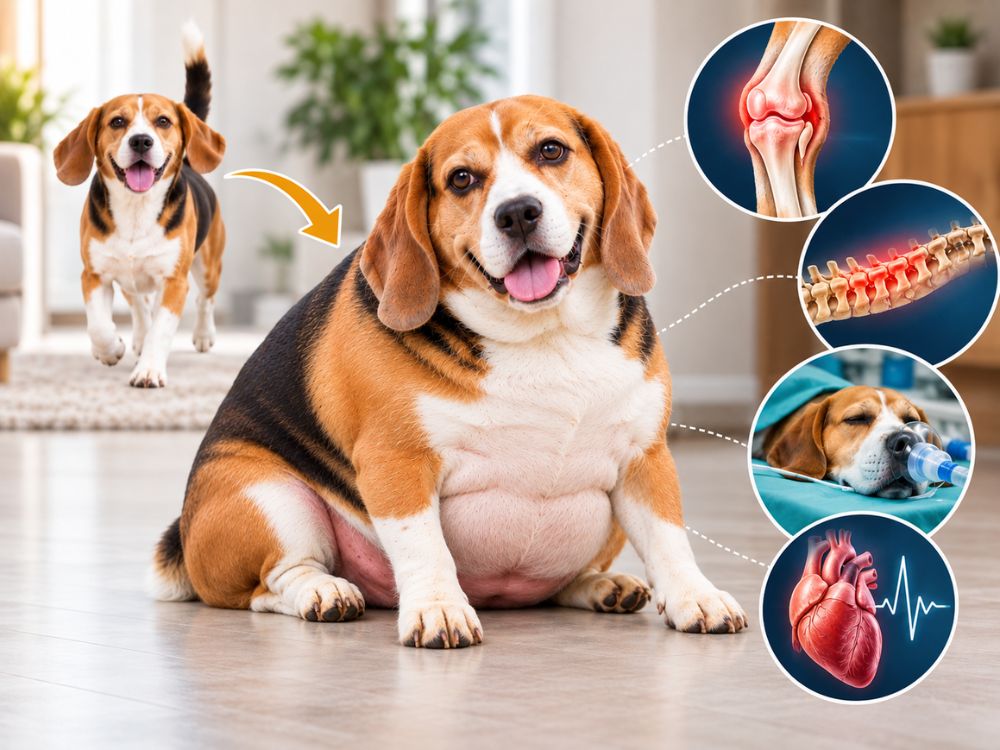
Beagle obesity is not a character flaw or an owner failing — it is a direct consequence of the breed’s physiology. Beagles have strong food motivation, weak satiety signals, and a body that stores fat efficiently. Combine this with the Indian tendency toward generous feeding and regular table scraps, and weight gain in Beagles is almost universal without active management.
According to the Association for Pet Obesity Prevention , Beagles consistently appear in surveys of the most overweight dog breeds. Excess weight accelerates joint degeneration, strains the spine, and significantly increases anaesthetic risk for a breed that already has some predisposition toward anaesthetic sensitivity.
The practical prevention is a weighed daily portion, no table scraps, and a monthly rib check. Feel the ribcage with light pressure — you should feel each rib distinctly without having to press through fat.
Ear Infections: Chronic and Climate-Specific
Beagle ears are long, heavy, and close to the face, which creates warm, low-airflow conditions in the ear canal that yeast and bacteria find ideal. In India’s humidity, this is compounded — the ear canal never fully dries naturally, making Beagles one of the most ear-infection-prone breeds in the Indian climate.
Weekly ear checks are non-negotiable for Indian Beagles. A healthy ear is light pink, odour-free, and produces minimal wax. Dark discharge, a yeasty or musty smell, or the dog shaking its head or scratching at one ear repeatedly are signs of infection that need veterinary attention. Recurring ear infections that don’t respond fully to treatment are sometimes linked to food allergies.
Recommended: 7 Pcs Tick Remover for Dogs Cats, Tweezer Comb Kit

Check behind and inside the ear flap after every park or garden visit. Ticks near the ear canal that aren’t removed properly — with the head intact — can cause localised infections that compound existing ear canal vulnerability. A proper removal tool prevents the much larger vet cost of a tick-related secondary infection.
Epilepsy: The Condition Beagle Owners Need to Know About
Idiopathic epilepsy is one of the most studied heritable conditions in the Beagle breed. The breed is used extensively in epilepsy research precisely because the condition occurs at a higher-than-average rate. Most cases appear between 6 months and 3 years of age.
What to do during a seizure: stay calm, move furniture or hazards away from the dog, do not put your hands near the dog’s mouth, and time the seizure. A single brief seizure in an otherwise healthy Beagle is not a vet emergency in the middle of the night, but it warrants a same-day or next-day appointment. A seizure lasting more than 5 minutes, or multiple seizures in 24 hours, is an emergency.
Skin Allergies and Hypothyroidism
Beagles are more prone to environmental and food allergies than many breeds. The most common presentations in India are: chronic itching and paw licking (often linked to grass or dust allergies), recurring hot spots in humid seasons, and ear infections that have an allergic component.
Hypothyroidism is worth mentioning because Beagles have a higher-than-average breed incidence. It presents gradually: weight gain despite controlled portions, lethargy, skin and coat changes, and cold sensitivity. A simple blood test diagnoses it, and treatment with synthetic thyroid hormone is effective.
Recommended: Tick & Flea Dog Shampoo 200ml Ditch to Itch Dog Shampoo

For Beagles with seasonal skin irritation or post-park itching, a neem-based shampoo used at bath time helps manage minor skin inflammation and reduces surface bacteria and parasite activity without harsh chemicals. It is particularly practical during monsoon when the combination of wet ground, warm temperatures, and grass contact increases skin irritation frequency in allergy-prone Beagles.
Eye Conditions
Beagles are predisposed to several inherited eye conditions, with glaucoma and cherry eye being the most common in Indian Beagle populations. Cherry eye is the prolapse of the third eyelid gland — it appears as a red, fleshy mass at the inner corner of the eye. Glaucoma causes increased pressure within the eye, is painful, and can lead to blindness if untreated. Annual eye checks from a vet who knows the breed are worth incorporating from around 2 years of age.
Conclusion
Most Beagle health issues are manageable when caught early and actively prevented. The weight, ear care, and monthly health check habits you build in the first year of ownership are the most protective things you can do for the breed’s long-term health. If you’re bringing a Beagle home, start these habits before problems appear rather than after.
FAQs
My Beagle is always hungry and I’m worried about overfeeding but also not feeding enough. How do I find the right amount?
Weigh the daily portion on a kitchen scale and use that as the fixed daily budget, including treats. Adjust based on the monthly rib check rather than the dog’s behaviour — a Beagle that acts hungry after a full meal is normal for the breed, not evidence that the portion is inadequate.
My Beagle had one seizure. Does this mean it has epilepsy?
A single seizure does not diagnose epilepsy. Your vet will likely run blood tests to rule out metabolic causes and may recommend monitoring before making a diagnosis. Keep a log of any subsequent episodes including date, duration, and what the dog was doing beforehand.
How do I know if my Beagle’s ear infections are caused by allergies?
The pattern is the key indicator. Ear infections that recur within weeks of clearing up, particularly if accompanied by paw licking, face rubbing, or skin redness, suggest an allergic component. Your vet may recommend an elimination diet trial or refer to a veterinary dermatologist.
My Beagle has started gaining weight despite eating the same amount. Should I just reduce food?
Unexplained weight gain in a Beagle eating a controlled diet warrants a thyroid test before simply reducing food further. Hypothyroidism causes weight gain that won’t respond adequately to caloric restriction alone.

 October 12, 2026