






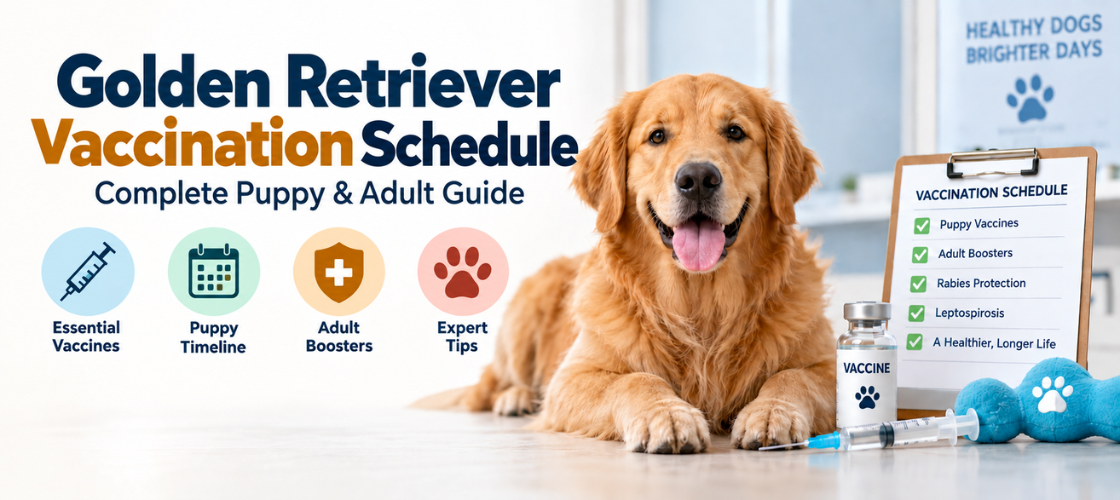
Most Golden Retriever owners are diligent about the first two or three puppy vaccines and then get fuzzy on what comes after. The puppy clinic visits feel urgent and structured. The adult booster schedule feels optional in a way that it genuinely is not — for a breed that’s sociable, outdoor-active, and often in contact with other dogs, gaps in vaccination coverage carry real risk.
This guide lays out the Golden Retriever vaccination schedule clearly, from the first puppy shot through adult maintenance, with notes on what applies specifically to dogs living in Indian conditions.
Core Vaccines Every Golden Retriever Needs
Distemper, Hepatitis, Parvovirus (DHPPiL or similar combination vaccine): This is the primary combination vaccine given in the early puppy series and boosted into adulthood. Parvovirus is particularly relevant in India, where it remains common in environments where dogs encounter other dogs or contaminated surfaces. Golden Retriever puppies are more susceptible than many breeds to severe parvovirus, partly due to the breed’s characteristic early friendliness.
Rabies: Legally required in most Indian states and genuinely critical given India’s rabies burden. The WHO estimates India accounts for approximately 36% of the world’s rabies deaths annually (https://www.who.int/news-room/fact-sheets/detail/rabies), and the risk to unvaccinated dogs in India is real.
Leptospirosis: Treated as a core vaccine in India even though it’s technically non-core in international guidelines. India’s monsoon conditions — flooded streets, stagnant water, rat exposure — make Lepto risk genuinely elevated for Golden Retrievers, who are water-attracted dogs and more likely than some breeds to walk through or play in puddles.
The Puppy Vaccination Timeline
| Age | Vaccine | Notes |
| 6 weeks | DHPPiL (first dose) | Can begin if puppy came from a rescue or uncertain background |
| 8 weeks | DHPPiL (second dose) | Standard starting point for most purchased puppies |
| 10 to 12 weeks | DHPPiL (third dose) + Leptospirosis (first dose) | Combine where possible to reduce vet visits |
| 12 to 16 weeks | Rabies (first dose) | Timing varies by state regulation |
| 16 weeks | DHPPiL booster | Final puppy series dose |
| 6 months | Deworming, follow-up check | Not a vaccine, but a standard milestone visit |
Keep the puppy indoors and away from unknown dogs until at least 2 weeks after the final puppy series vaccine. Golden Retriever puppies, being naturally sociable and floor-level explorers, are high-risk for parvovirus exposure during this window.
Adult Booster Schedule
| Vaccine | Booster Frequency |
| DHPPiL | Annually (some protocols allow 3-yearly after primary series, ask your vet) |
| Leptospirosis | Annually |
| Rabies | Annually or every 3 years depending on vaccine type used |
In India, annual boosters for all core vaccines are the more common and generally recommended protocol given the higher disease exposure environment compared to many Western countries.
Non-Core Vaccines Worth Discussing
Kennel Cough (Bordetella): If your Golden is regularly boarded, attends dog parks, or participates in training classes with other dogs, kennel cough vaccination is worth discussing with your vet. Golden Retrievers are social dogs, and kenneling or group training is common for the breed.
Canine Influenza: Less universally recommended in India than in the US or Europe, but worth asking about if your dog is frequently around large groups of other dogs.
Managing the Vaccine Schedule Practically
A Golden Retriever’s vaccination schedule is easiest to maintain when it’s tied to a specific recurring event — many owners link annual boosters to the dog’s birthday or adoption anniversary. Missing boosters by a few months is not catastrophic for most vaccines, but lapsed vaccination in India specifically, where disease exposure is higher than in many countries, carries more risk.
Keep a physical vaccination card and photograph it. Veterinary records can be difficult to reconstruct if you change vets, travel with your dog, or need to board the dog at a facility that requires proof of vaccination.
Recommended: HI Focus 4L Smart Automatic Pet Feeder with HD Camera
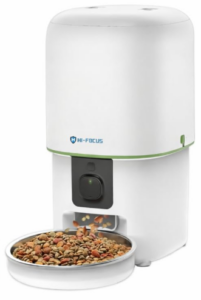
During puppy vaccination periods, when feeding schedules are closely monitored alongside health status, an automatic feeder with camera confirmation ensures meals happen on time even when the household is at work. The portion control is also useful during the puppy growth phase when overfeeding is one of the most common Golden Retriever owner mistakes.
Post-Vaccine Care
Mild soreness at the injection site and reduced activity for 24 to 48 hours after vaccination is normal. Some Golden Retrievers show temporary lethargy and reduced appetite, which is not a cause for concern unless it persists beyond 48 hours.
Genuine allergic reactions are rare but can include facial swelling, hives, vomiting within 30 minutes of vaccination, or sudden collapse. Stay at or near the vet clinic for 20 to 30 minutes after each injection during the puppy series, so any reaction can be treated immediately.
Conclusion
A complete and consistent Golden Retriever vaccination schedule is one of the most straightforward investments in a long, healthy life for the breed. The puppy series requires attention and timing; the adult maintenance is mostly about not forgetting. If you’re getting a new puppy, start a physical vaccination record on day one and keep it updated at every vet visit.
FAQs
My Golden Retriever puppy was vaccinated by the breeder. Do I need to start the series again?
Not necessarily, but verify exactly which vaccines were given and when, and share the paperwork with your vet. If the documentation is incomplete or the first vaccine was given before 6 weeks of age, your vet may recommend restarting part of the series to ensure adequate immunity.
Can my puppy socialise before completing all vaccines?
Carefully and selectively, yes. Avoid dog parks, pet stores, and unknown dogs. Socialising with fully vaccinated dogs in private, clean home environments is generally considered acceptable from around 10 to 12 weeks. The socialisation window for Golden Retrievers is important enough that complete isolation until 16 weeks carries its own developmental risks.
Does my adult Golden still need annual vaccines?
Yes. Antibody levels from vaccines decline over time. In India specifically, where disease exposure is higher than in many countries, maintaining annual boosters is the standard recommendation. Some vets offer titer testing to measure existing immunity before boosting, which is an option worth discussing if you have concerns about over-vaccination.
What should I do if I’ve lost my dog’s vaccination records?
Visit your vet, explain the situation, and discuss re-vaccination. For most core vaccines, repeating the series is safe even if some immunity already exists. It is better to re-vaccinate than to assume coverage that may have lapsed.

 October 16, 2026