



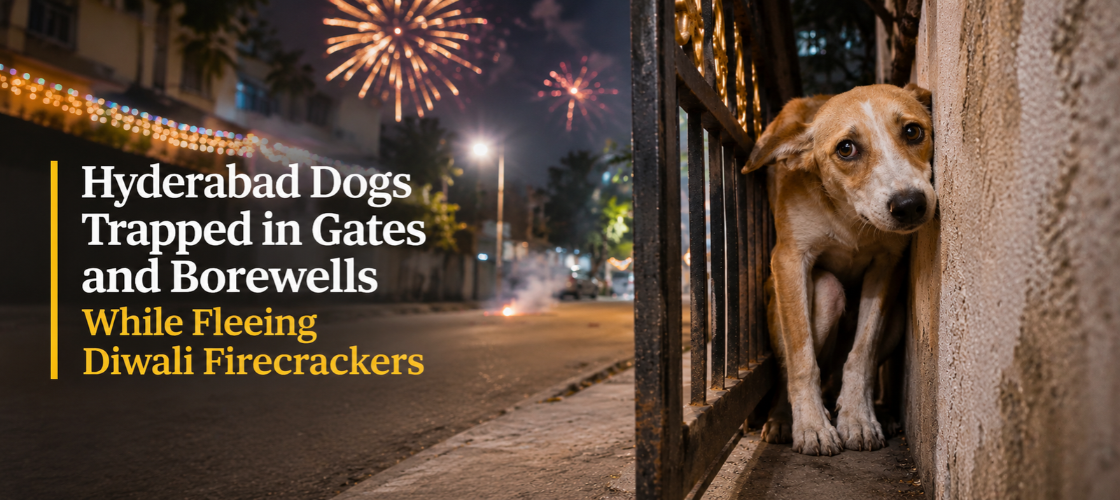
The Animal Warriors Conservation Society rescued three dogs from confined spaces across Hyderabad over Deepavali weekend after the animals fled in panic from firecracker sounds and became wedged in gates and narrow gaps. A pup fell into a borewell in Gajwel, Siddipet district, and had to be pulled out and reunited with its mother. A cat died after jumping into a well at Medipally. Animal rescue NGOs fielded multiple distress calls on Sunday and Monday. AWCS founder Pradeep Nair said several additional incidents almost certainly went unreported.
The incidents are a consistent pattern every year, but this Diwali produced a concentrated run of calls within a narrow window.
What Happens to Dogs During Firecrackers
Dogs hear sound at frequencies and volumes that humans do not. A firecracker that registers as loud to a person registers as genuinely overwhelming to a dog. The physiological response is a fear response: elevated heart rate, shaking, panting, disorientation, and in severe cases, full flight. Street dogs have nowhere to shelter. They run, and they run without direction.
That is how a dog ends up jammed in a gate or down a borewell. It is not a freak accident. It is what uncontrolled flight through an urban environment looks like when the animal is in a panic.
At the Super Speciality Veterinary Hospital in Narayanguda, four dogs were admitted, two to the main hospital and two to government clinics, for noise distress. GHMC chief veterinary officer Dr Abdul Wakil confirmed the admissions and said the animals were being monitored. Most were not physically injured. The damage was psychological, though that word rarely appears in how these cases get described. Twenty street dogs in Banjara Hills were cared for by community members who sat with them through the worst of the noise. Some pet owners left their dogs at GHMC shelters or private boarding centres for the duration.
Cracker explosions and flashes distressed street dogs, pets and birds in and around Hyderabad on Deepavali, with Animal Warriors Conservation Society receiving multiple calls. Founder Pradeep Nair said animals may take a few days to recover from the noise and chemical residue.
#Hyderabad #Deepavali #AWCS #PradeepNair #AnimalRescue
— Telangana Today (@TelanganaToday) November 9, 2026
The Chemical Residue Problem
Pradeep Nair noted that the harm does not stop when the crackers do. Chemical residue from fireworks remains in the air for days after a major burst of activity. For street dogs who sleep and move at ground level, in the same air column where the smoke settled, that exposure continues after the noise ends.
A carcass of a snipe, a migratory bird, was found near Hi-tex City in the aftermath. Birds are acutely sensitive to both sudden percussion and air quality changes. Nair said animals may take several days to recover from the combined effects of noise and residue.
The Structural Problem
The incidents in Hyderabad this weekend are not unusual. What makes them worth documenting is the regularity. Every Diwali produces the same set of outcomes: panicked dogs trapped in structures, rescuers working through the night, admissions to veterinary facilities, and scattered deaths among animals who could not find cover in time.
Animal welfare organisations have consistently called for restrictions on high-decibel firecrackers in residential areas. Courts have issued guidelines. Enforcement has been inconsistent at best. The Supreme Court has set standards for permissible sound levels from fireworks for years, and those standards are routinely exceeded in most Indian cities during the festival season.
The dogs that AWCS pulled from gates this weekend will recover. The pup from the borewell in Gajwel is back with its mother. The pattern they were caught in will repeat next October.

 November 6, 2026