






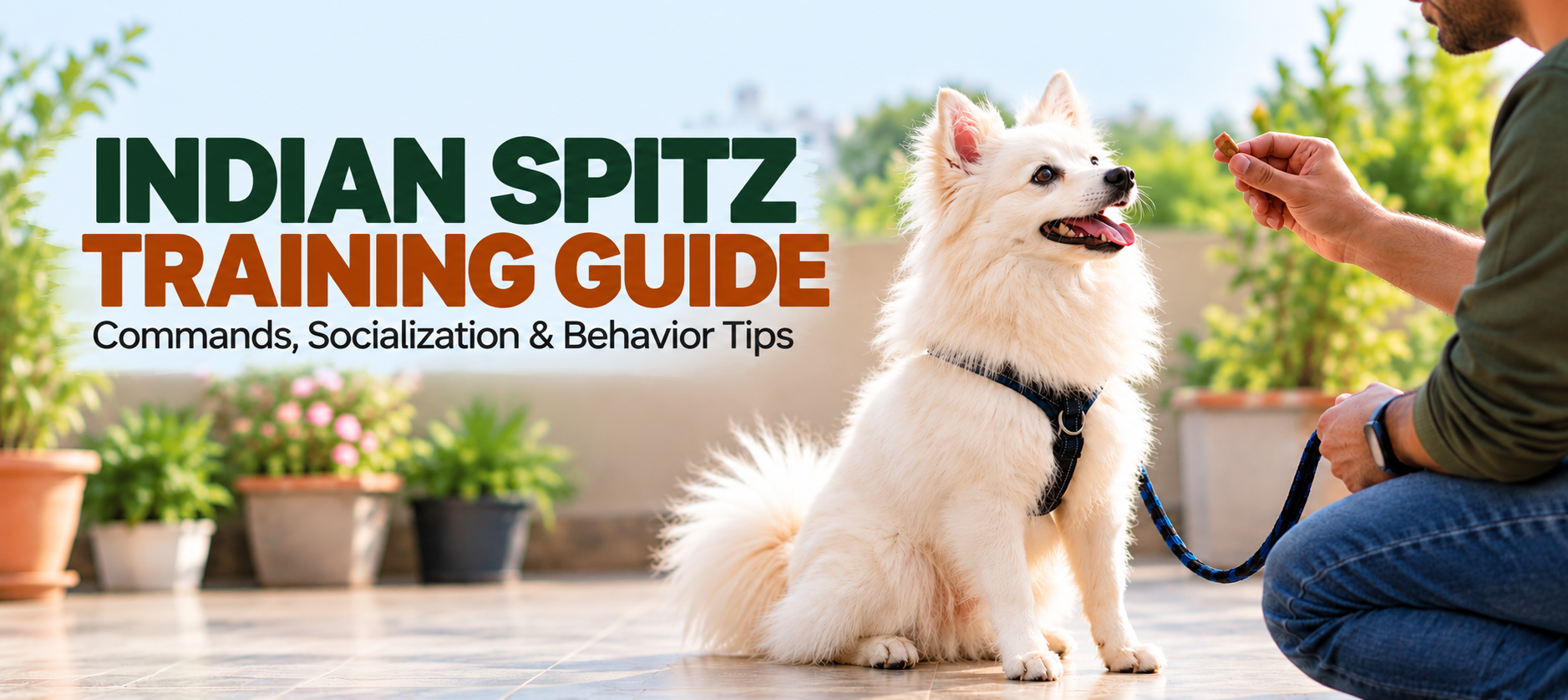
The Indian Spitz is one of those breeds that surprises owners who weren’t expecting much. They look decorative. They turn out to be quick, alert, and genuinely intelligent dogs whose training potential is underestimated because they’re often grouped with lapdogs when they’re functionally closer to working small breeds. The challenge isn’t that Indian Spitz are hard to train — they’re not. The challenge is that they’re independent enough to need a reason to comply and alert enough to get distracted by everything that moves, sounds, or smells interesting.
These Indian Spitz training tips are written for the reality of Indian households — apartment living, street-level distractions, large families, and a breed that was historically valued for exactly the alertness that can make training feel like a negotiation.
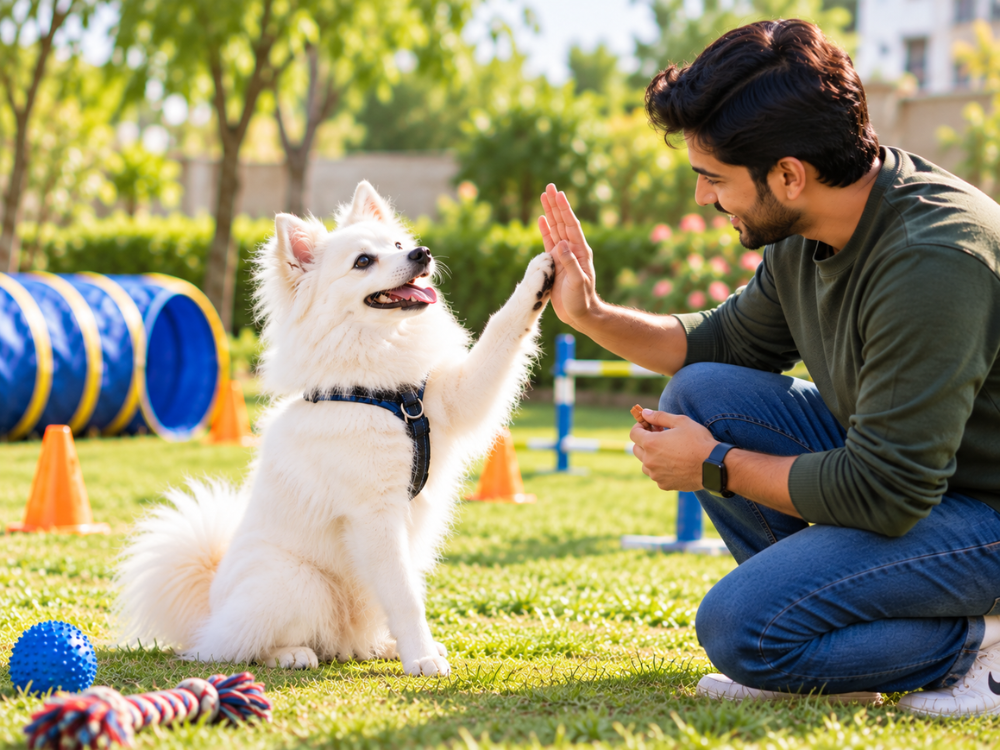
Understanding the Indian Spitz Temperament
The Indian Spitz was kept as a watchdog and companion in Indian households during a period when imported breeds were expensive and unavailable. That history shows in the breed’s behaviour: they monitor their environment, alert to anything unusual, and form strong bonds with their immediate family while remaining wary of strangers.
The Indian Spitz is not a breed that trains itself through enthusiasm and people-pleasing in the way a Golden Retriever does. They’re more calculating about whether compliance is worth their while, which is actually an advantage if you harness it — a dog that thinks about what it’s doing learns commands with more depth than one that just reflexively obeys.
Core Commands and How to Teach Them
Sit: The first command and the one that establishes the training relationship. Food luring works well. Most Indian Spitz learn this in one or two sessions.
Stay: Requires more patience. The Spitz’s alert temperament makes holding a stay when something catches their eye genuinely difficult. Build duration in a quiet indoor environment before adding distractions.
Come: Critical for this breed. Train it with the highest-value reward you can offer, in a long-lead session first, and proof it extensively before relying on it in open spaces.
The quiet command: Addresses the breed’s most consistent behavioural challenge. Train it by waiting for a natural pause in barking, marking the silence, and rewarding. Extend the duration of silence required before reward gradually.
Managing the Alert Barking
Alert barking in an Indian Spitz is not a personality problem — it’s what the breed was developed for. The goal is not to eliminate it but to give the dog a way to communicate and then settle. A Spitz that can give one or two warning barks and then respond to quiet is doing exactly what a watchdog should do.
Recommended: HANK Tactical Dog Harness
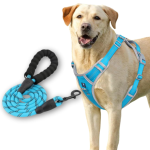
Desensitisation walks in the neighbourhood, where the Spitz is exposed to its triggers in a controlled way while on lead, are one of the most effective tools for reducing reactivity. A no-pull harness is important for this breed because the Spitz will lunge and spin toward things that interest or alarm it, and a collar puts pressure on the neck during these moments.
Socialization for the Indian Spitz
The Indian Spitz’s wariness of strangers is appropriate but needs to be calibrated through socialization so it doesn’t extend to every person, child, or dog the dog encounters. Socialization during the critical window of 3 to 14 weeks is most effective.
Recommended: amazon basics Two Door Top Load Pet Kennel
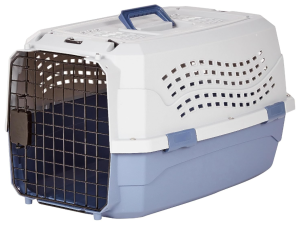
Carrying a small Spitz in a ventilated carrier through a busy market or a new environment is often the most effective way to expose them to stimuli at a controlled intensity. The dog sees, hears, and smells the environment without being overwhelmed at ground level, which allows the nervous system to habituate at a pace the dog can handle. Once comfortable with an environment from the carrier, ground-level introduction is less stressful.
Training in Multi-Person Indian Households
Indian Spitz in joint family homes face a consistency challenge. The dog interacts with multiple household members across generations, each with different rules, tolerances, and training approaches. A Spitz is perceptive enough to figure out exactly what each person allows. House rules established at the beginning need to be agreed on by everyone in the household and maintained consistently.
Conclusion
Indian Spitz training is rewarding precisely because the breed is smart enough to learn quickly and independent enough that the training represents a real communication achievement between owner and dog. The Indian Spitz training tips that work consistently are those that respect the breed’s intelligence, address the alert temperament with socialization rather than suppression, and establish house rules that everyone in the household actually follows.
FAQs
My Indian Spitz barks at everything outside the window. How do I stop this?
Management first: remove access to the window if the barking is constant and unmanageable. Training second: teach the quiet command and apply it consistently every time barking occurs. Systematic desensitisation to the specific triggers helps reduce the underlying reactivity over 2 to 4 weeks of daily practice.
At what age should I start training my Indian Spitz?
From 8 weeks. Basic commands like sit and come should begin in the first week at home. Socialization is even more urgent — the earlier the better, within the safety constraints of vaccination status.
My Spitz is fine at home but becomes reactive and difficult on walks. What should I do?
Begin with very short, calm walks in low-stimulation areas, using high-value treats to reward loose-leash walking and calm behaviour near triggers. Gradually increase exposure as the dog’s comfort level in each environment improves.
Is the Indian Spitz good for first-time dog owners?
Yes, with the qualification that first-time owners need to take socialization and consistent training seriously. The Spitz is not difficult to train, but a Spitz in a household where training was started and then abandoned tends to become noisy and reactive in a way that’s harder to fix than it would have been to prevent.

 October 14, 2026