






If you’ve had an Indian Spitz for even a few months, you already know the coat is the whole conversation. That thick, fluffy double coat is exactly what makes the breed so visually striking, and it’s also the thing that generates enough loose fur during shedding season to concern first-time owners who weren’t warned. Indian spitz grooming tips that actually work in Indian conditions are different from what you’d find in a generic small-breed guide, because the climate creates specific challenges that temperate-country advice does not account for.
The Indian Spitz Coat: What You’re Working With
The Indian Spitz has a dense, soft undercoat beneath longer, straighter guard hairs that form the fluffy outer appearance. Indian Spitz in India shed moderately year-round with two heavier periods: one in the warmer months as the winter undercoat releases, and a second post-monsoon as the coat adjusts to the shift from humid to drier conditions.
The coat is not as high-maintenance as a Pomeranian or Maltese, but it needs consistent brushing to prevent tangles from developing in the undercoat, which become increasingly difficult to remove without causing the dog discomfort.
Brushing: Tools and Frequency
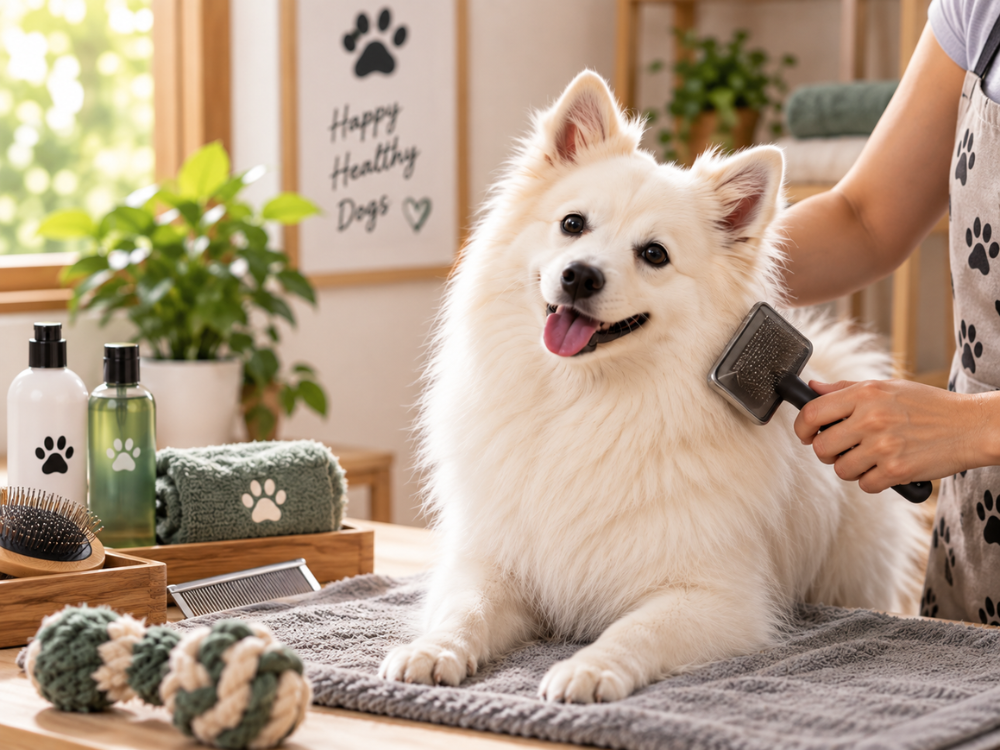
The right tool for an Indian Spitz is a combination of a pin brush for the outer coat and an undercoat comb or slicker brush for the inner layer. Brush the undercoat first with the slicker brush or comb, working in sections. The areas most prone to matting are behind the ears, under the armpits, around the collar zone, and in the ruff (the thick fur around the neck).
Frequency: three to four times a week during normal periods. Daily during blow coat. Weekly-only brushing during heavy shedding results in tangles that require significant time to remove and are uncomfortable for the dog.
Bathing the Indian Spitz
Every 3 to 4 weeks is appropriate for most Indian Spitz. More frequent bathing strips the coat of natural oils. The main bathing challenge with this breed is the dense undercoat — water takes much longer to penetrate than it does with a short-coated dog. Spend 3 to 5 minutes wetting the coat before applying any product, working water in with your fingers. Rinse until the water runs completely clear.
Drying is the most time-consuming step with this coat. In India’s humidity, a partially dry Indian Spitz coat can develop a musty smell within hours and is at risk for hot spots. A low-heat blow dryer is the best drying method.
Recommended: Purepet Adult Dry Dog Food 10kg
Coat quality in dogs is directly connected to diet, and the Indian Spitz’s fluffy coat requires adequate protein and fat intake to maintain its texture. Purepet Adult provides the protein baseline that keeps the coat from becoming dull or brittle between grooming sessions. A noticeably poor coat in a well-brushed Spitz is often a dietary issue before it’s a grooming one.
Managing the Coat in Indian Summers
The Indian Spitz’s double coat provides both cold and heat insulation when functioning correctly. Shaving this coat in summer disrupts this insulation mechanism and exposes the skin to UV damage. Most veterinary dermatologists do not recommend shaving double-coated breeds in Indian summers.
- Keep the undercoat cleared of dead fur through regular brushing — matted undercoat traps heat rather than regulating it
- Keep baths more frequent in summer (every 3 weeks rather than 4) to remove sweat and debris from the coat
- Walk during early morning and evening when pavement temperatures are lower
- Ensure indoor ventilation or air conditioning during peak midday heat
Ears, Nails, and Eyes
Ears: check weekly. A light clean of the visible ear canal every 2 weeks is sufficient in most cases. Nails: every 3 to 4 weeks. Eyes: the coat around the eyes can grow into the eye line in some Spitz, causing irritation. Trim any fur that contacts the eye surface with blunt-ended scissors or have a groomer handle this.
Conclusion
The Indian Spitz coat rewards consistent maintenance more visibly than most breeds. Build the brushing into a 3-times-weekly habit rather than treating it as an occasional task, stay on top of blow coat periods with daily sessions, and the rest of the Indian spitz grooming routine is manageable in under 30 minutes a week.
FAQs
My Indian Spitz has mats that will not brush out. What should I do?
For mats in the early stage, apply a dog detangling spray, let it sit for 2 minutes, then work the mat loose with your fingers before attempting the brush. Mats that are dense and sitting flat against the skin are best handled by a professional groomer to avoid accidental skin cuts.
Why does my Indian Spitz smell between baths even though I brush regularly?
Post-bath drying is usually the cause. If the undercoat stays damp after bathing, it develops a musty smell that persists until the coat is fully dry. Blow-dry thoroughly after every bath.
How do I stop my Indian Spitz from getting tangled specifically in the neck and ear areas?
These spots tangle faster because the fur is thicker and layered differently than the body coat. Check and brush these areas every time you groom, even if you do a quick brush rather than a full session.
Can I take my Indian Spitz to a grooming salon rather than doing this at home?
Professional grooming every 6 to 8 weeks works well for Indian Spitz, particularly for bathing, drying, ear cleaning, and nail trimming. Home brushing between salon visits is still necessary.

 October 7, 2026