






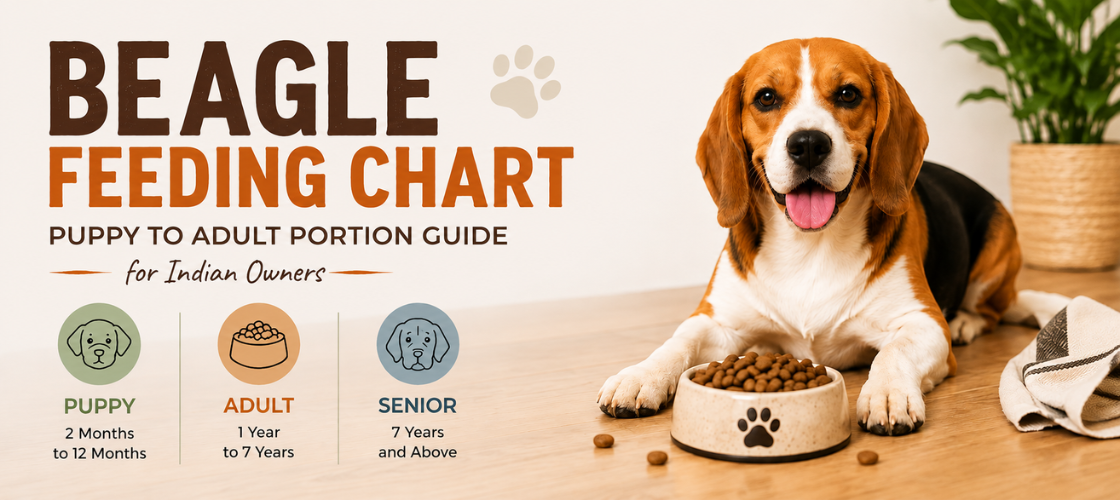
Beagles are small dogs with large appetites and no internal volume control whatsoever. That’s not an exaggeration. The breed was literally developed to follow scent trails for hours, which means they’re wired to eat whenever food is available because, historically, they never knew when the next meal was coming. That instinct doesn’t switch off in a Mumbai flat or a Bangalore apartment.
The result? Beagles are one of the most overfed breeds in India. Owners misread the constant begging as hunger, add a little extra here and there, and within a year the dog is carrying significantly more weight than it should. Obesity in Beagles compounds fast because the breed is already low to the ground and short-legged — extra weight goes directly to the spine and joints.
This Beagle feeding chart is built to cut through that confusion. Exact portions by age, what to feed, what to skip, and how to tell if what you’re doing is actually working.
Why Beagles Are So Easy to Overfeed
The hunger signals are real, not theatrical. According to a study published in PLOS Genetics (https://journals.plos.org/plosgenetics/article?id=10.1371/journal.pgen.1001361), Beagles are among the breeds most commonly used in appetite and obesity research precisely because of their strong, consistent food motivation. Their drive to eat is physiologically driven, not just behavioral. Understanding this matters because it changes how you interpret your dog’s behavior. When a Beagle whines at the bowl ten minutes after finishing a full meal, that’s not starvation — it’s a dog whose satiety signals don’t work the way a less food-obsessed breed’s do.
This is also why free-feeding absolutely doesn’t work for Beagles. Leave food out all day and a Beagle will eat until it’s gone, then look for more. Structured meals with fixed times and fixed quantities are the only approach that consistently manages their weight.
Beagle Feeding Chart by Age
All quantities below are for dry commercial food (kibble). If you’re feeding home-cooked or a mix, portions are covered separately.
Puppy Stage: 2 Months to 12 Months
| Age | Daily Meals | Approx. Daily Quantity (Dry Food) |
| 2–3 months | 4 meals | 80–120g |
| 3–6 months | 3 meals | 120–160g |
| 6–9 months | 3 meals | 150–180g |
| 9–12 months | 2–3 meals | 160–200g |
Beagle puppies are compact but they grow quickly in the first six months. The 4-meal schedule at 2–3 months isn’t optional — small puppies have small stomachs and can’t process the daily portion in one or two sittings without digestive upset.
One thing that catches owners off guard: Beagle puppies look perpetually hungry even when they’re adequately fed. Don’t let that drive portion creep. Weigh the food. Eyes-only measurement with a breed this food-motivated will almost always trend upward over time.
Adult Stage: 1 Year to 7 Years
| Weight of Dog | Daily Dry Food (Moderate Activity) | Daily Dry Food (High Activity) |
| 8–10 kg | 160–190g | 200–230g |
| 10–12 kg | 185–215g | 225–260g |
| 12–14 kg | 210–240g | 250–285g |
Most adult Indian Beagles sit between 9–12kg. If your dog is above 13kg, that’s a weight problem to address, not a portion baseline to feed up to. Use the column that reflects what the dog should weigh, not what they currently weigh.
If your Beagle is spayed or neutered, subtract 10% from whichever column applies. Desexed Beagles have meaningfully slower metabolisms than the table assumes.
Senior Stage: 7 Years and Above
| Age | Daily Dry Food | Notes |
| 7–9 years | 150–185g | Reduce if activity has dropped noticeably |
| 9+ years | 130–165g | Switch to senior formula; monitor weight monthly |
Senior Beagles are quieter, sleep more, and burn fewer calories — but they eat with the same enthusiasm they had at two years old. That mismatch is where the weight creeps in. Move to a senior-specific formula proactively once the dog crosses 7, and do the rib test monthly rather than waiting for visible changes.
What to Feed a Beagle in India
Kibble
For most Indian Beagle owners, a quality dry food is the most practical and nutritionally complete choice. Look for formulas where the first listed ingredient is an animal protein — chicken, fish, or lamb — not corn or soya. Beagles are prone to food allergies, and grain-heavy formulas can trigger chronic ear infections and skin issues that owners often don’t connect to diet.
Recommended: Pedigree Adult Wet Dog Food
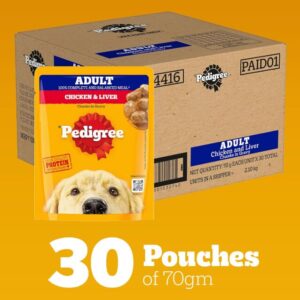
Works well as a complement to dry kibble — a spoonful mixed into the dry food adds palatability, moisture, and keeps mealtimes interesting without significantly increasing daily calories. Beagles who drink poorly during summer benefit from the added hydration wet food provides.
Home-Cooked Meals
Home-cooked food is a viable option for Beagles provided the portions are weighed and the nutritional structure is intentional. Because this is a small breed, the margin for error is smaller — a 200-calorie surplus on a 10kg dog is proportionally much larger than the same surplus on a 35kg Labrador.
A working meal structure for an adult Beagle:
- Protein (40–45%): Boiled chicken without skin or bones, eggs (1–2 per day), small amounts of fish
- Carbohydrates (35–40%): Plain rice or sweet potato — easy to digest, no digestive irritation
- Vegetables (15–20%): Pumpkin, carrots, spinach, beans; strictly no onion, garlic, or grapes
- Fat: A small amount of coconut oil or a fish oil capsule twice a week
The fat requirement is easy to miss with home-cooked food. Beagles need adequate dietary fat for skin and coat health, and plain chicken-rice-vegetable meals without any fat source lead to dry, flaky skin over time.
Raw Feeding
Some Indian Beagle owners raw-feed with good results. The portions need careful calibration because raw food is calorie-dense and Beagles will eat whatever quantity is placed in front of them. Raw chicken bones (uncooked only) are safe and beneficial for dental health. Cooked bones of any kind are not.
Managing the Beagle Appetite Problem
This is the real challenge with the breed, more than the food choice or the exact gram count. A few things that work in practice:
Slow feeder bowls break up the inhale-in-30-seconds eating pattern most Beagles develop.
Recommended: Slow Feeder Dog Bowl Insert with Octopus Suction Cups

Makes the meal last 3–4x longer. That pacing matters for digestion and for reducing post-meal begging behavior. The suction base keeps it stable even for enthusiastic eaters.
Meal timing matters more than most owners realize. Two fixed meals a day, at consistent times, regulates hunger patterns better than variable feeding. A dog that gets fed at 8am and 7pm every day without exception develops a more predictable hunger rhythm than one fed whenever the owner remembers.
Treats are the hidden calorie trap. Beagles are exceptionally trainable precisely because food motivates them so strongly. Count training treats as part of the daily food budget, not in addition to it, and use small pieces — a quarter of a biscuit is as motivating as a whole one.
India-Specific Notes
Summer feeding: Beagles eat less in peak summer and that’s fine. Prioritize water over food during April–June. If your dog seems uninterested in kibble during the heat, adding a tablespoon of wet food or warm water to the bowl often restores interest.
Bloat risk: Lower than in large deep-chested breeds, but not zero. Two meals a day and no vigorous exercise within 30 minutes of eating is good practice regardless.
Worm load: Intestinal parasites are extremely common in Indian dogs. If your dog is eating appropriate quantities and still seems thin, deworm before adjusting portions.
How to Know If the Portions Are Working
The rib test works the same way for Beagles as any breed. Run both hands along the ribcage. You should feel each rib with light pressure — a thin muscle covering is fine, but you shouldn’t have to push through fat to find the ribs.
From above, a healthy Beagle should have a visible waist. The breed tends to carry excess weight across the abdomen and lower back. If the silhouette from above is a sausage shape with no narrowing behind the ribs, the dog is overweight.
Weigh your Beagle monthly. At 10kg, a 500g gain is a 5% increase in body weight. That happens quietly over a few months of slightly-too-generous portions, and catching it early is always easier than reversing an established pattern.
Conclusion
A Beagle feeding chart is only useful if you actually weigh the portions and stick to the schedule — with this breed more than any other, consistency is the whole game. Adjust every few months as your dog ages or their activity level changes, run the rib test monthly, and treat the daily food budget as fixed rather than flexible. A lean Beagle is a healthier Beagle by every measure.
FAQs
My Beagle finishes their food in under a minute and immediately begs for more. Should I feed them again?
No. Finishing fast and begging after are both normal Beagle behaviors, not signs that the portion was inadequate. A slow feeder bowl helps with the speed. The post-meal begging passes faster than owners expect once the dog adjusts to a consistent schedule — usually within 2–3 weeks.
Is it okay to give my Beagle dal or roti?
Plain, unseasoned cooked dal in small amounts isn’t harmful. The standard Indian preparation with tadka is a problem. Plain roti occasionally is fine; avoid anything made with excess oil or spice. Neither should become a regular part of the diet since they don’t meet the protein requirements the breed needs.
How often should I deworm my Beagle?
Every 3 months is the standard recommendation for Indian dogs regardless of breed. Beagles that spend time outdoors and sniff the ground constantly are at higher-than-average exposure risk. Don’t skip the schedule after puppyhood.
At what age should I switch my Beagle from puppy to adult food?
12 months is appropriate for Beagles. They’re a small-to-medium breed and reach physical maturity earlier than large breeds. Switching at 12 months cuts the higher caloric density of puppy food at the right time.
My Beagle is 14kg and the vet says they’re overweight. How should I adjust?
Reduce daily kibble by 10–15%, use a slow feeder bowl to extend meal duration, cut training treats from extras to part of the daily portion, and add a 20-minute walk to the daily routine if that’s not already there. Recheck weight monthly. Don’t starve the dog — gradual reduction over 8–12 weeks works better than aggressive cuts.

 October 5, 2026