






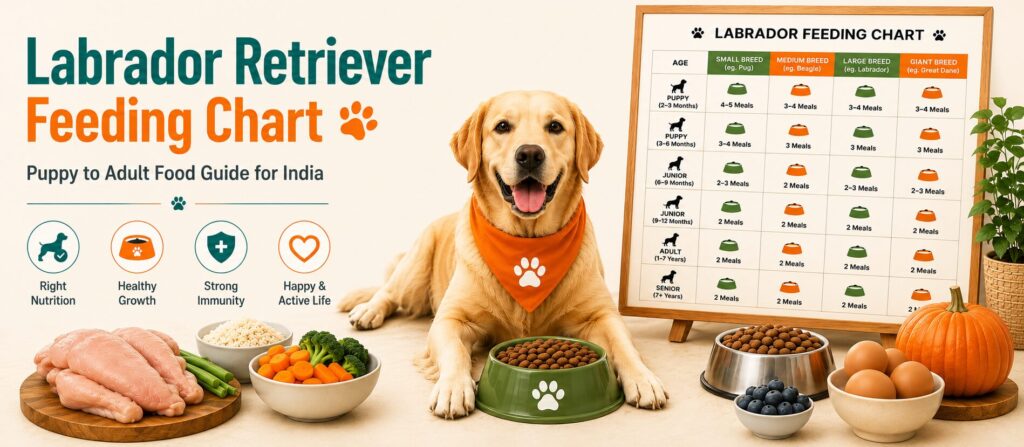
If you’ve ever stood in front of your Lab with a bowl of kibble wondering whether you’re giving too much or too little, you’re not alone. Labradors are notorious for acting like they’re permanently starving, even when they’ve just finished a full meal. It’s one of their most endearing (and exhausting) traits. The problem is, that enthusiasm can easily lead owners to overfeed, and before you know it, your dog is overweight and heading toward joint problems and a shorter life.
Getting the labrador retriever feeding chart right isn’t about being rigid. It’s about understanding what your dog actually needs at each life stage, adjusting for India’s climate and food availability, and recognising when something’s off.
This Labrador feeding chart guide covers everything from puppy meals to senior diets, with feeding schedules, portion guidance, and practical advice for Indian households. It also answers the question every owner eventually asks: how much should a Labrador eat per day.
Why Labradors Need a Structured Feeding Plan More Than Most Breeds
Labs aren’t just greedy by habit. According to a 2016 study published in Cell Metabolism, a significant number of Labradors carry a genetic mutation in the POMC gene that affects the feeling of fullness. Their brains genuinely do not receive the “I’ve had enough” signal the same way other dogs do. That’s not misbehaviour; that’s biology.
This makes structured feeding especially important for the breed. Free-feeding (leaving a bowl out all day) almost never works well with Labs. It almost always leads to obesity, which then causes a cascade of health problems including hip dysplasia, diabetes, and cardiac stress.
A structured labrador retriever feeding chart based on age, weight, and activity level is the single most effective thing you can do to protect your dog’s long-term health.
Labrador Retriever Feeding Chart by Life Stage
The quantities below are general guidelines for a Labrador diet plan. Individual dogs vary based on metabolism, activity level, neutered/intact status, and whether they’re fed commercial dry food, wet food, or a home-cooked diet. Always calibrate based on your dog’s body condition score, not just the number on a Labrador diet chart.
Puppy Stage: 2 Months to 12 Months
Labrador puppies grow fast. They need calorie-dense, protein-rich Labrador puppy food to support bone development, muscle growth, and brain function. Underfeeding during this stage causes developmental issues; overfeeding causes rapid weight gain that stresses growing joints. Use this Labrador puppy feeding chart as your starting point and adjust based on how your puppy is growing.
| Age | Daily Meals | Approx. Quantity Per Day (Dry Food) |
| 2–3 months | 4 meals | 150–200g |
| 3–6 months | 3 meals | 200–280g |
| 6–9 months | 3 meals | 280–350g |
| 9–12 months | 2–3 meals | 300–380g |
Switch to adult food around 12 months. Some larger Labs can stay on puppy food up to 15 months, but don’t extend it much beyond that — puppy formulas have higher calorie density that the dog no longer needs.
Tip for Indian pet owners: During summer months (April to June), puppies may eat less due to heat. Don’t panic, and don’t force meals. Offer food at cooler times of the day, early morning and after sunset, and make sure water intake stays high.
Adult Stage: 1 Year to 7 Years
This is the maintenance phase. Your goal here is to keep your Lab lean, muscular, and energetic without letting them gain excess weight.
| Weight of Dog | Daily Dry Food (Moderate Activity) | Daily Dry Food (High Activity) |
| 25 kg | 280–320g | 340–380g |
| 30 kg | 320–370g | 380–430g |
| 35 kg | 360–410g | 430–490g |
| 40 kg | 400–460g | 470–530g |
Split the daily quantity into two meals as part of a consistent Labrador feeding schedule: one in the morning and one in the evening. Avoid feeding immediately before or after exercise to reduce the risk of bloat, which while less common in Labs than in deep-chested breeds, can still occur.
Neutered Labs tend to have slower metabolisms. If your dog has been spayed or neutered, reduce the daily quantity by roughly 10–15% and monitor weight monthly.
Senior Stage: 7 Years and Above
Older Labs slow down, and their caloric needs drop. But they often need more joint-supporting nutrients like glucosamine, chondroitin, and omega-3 fatty acids. Senior-specific commercial food accounts for this, or you can supplement a regular diet with fish oil.
| Age | Daily Dry Food (Lower Activity) | Notes |
| 7–9 years | 270–330g | Divide into 2–3 smaller meals |
| 9+ years | 240–300g | Monitor weight closely; add joint supplements |
Older dogs often develop dental sensitivity. If your senior Lab is struggling with hard kibble, soak it in warm water for a few minutes before serving. It makes a big difference.
What to Feed Your Labrador in India: Practical Food Choices
Commercial Dry Food (Kibble)
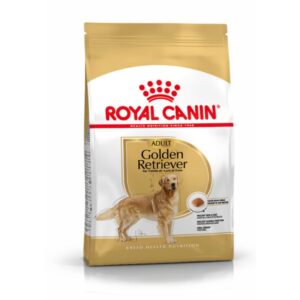
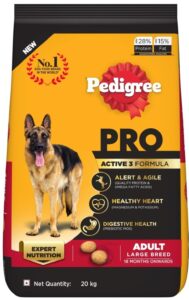
Good quality kibble remains the most convenient and nutritionally balanced option for most Indian households, and often the easiest way to find the best food for Labrador in India. Look for brands where the first ingredient is a named animal protein (chicken, lamb, fish) rather than corn or wheat as the primary ingredient.
Well-regarded options available in India include:
|
Retriever Breed-Specific |
Pedigree Pro |
Arden Grange |
 |
 |
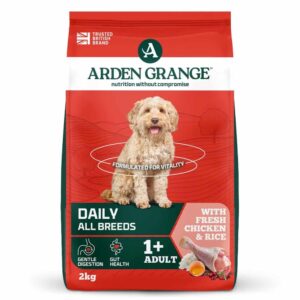 |
| Royal Canin Golden Retriver Adult Dog Food, 3 KG, Dry Food | Pedigree PRO Adult Large Breed, 20 kg Dry Dog Food, Vet Trusted Brand | Arden Grange Dry Dog Food Adult Dog Chicken and Rice 2-kg |
Match your choice to your budget while keeping protein content as the non-negotiable factor.
Home-Cooked Diets
Many Indian dog owners prefer homemade food for Labrador, especially if the family is already cooking fresh meals daily. A home-cooked diet for a Labrador typically includes:
- Protein (40–50% of the meal): Boiled chicken (without bones), eggs, paneer, cooked lentils (in moderation), fish like rohu or katla
- Carbohydrates (30–40%): Rice is the most common and digestible option; roti in small amounts is acceptable
- Vegetables (20–30%): Pumpkin, carrots, beans, spinach, and beetroot all work well; avoid onion, garlic, and grapes entirely
- Fat source: A teaspoon of coconut oil or mustard oil occasionally; fish oil capsules for omega-3s
The challenge with home-cooked diets is ensuring nutritional completeness. If your Lab is on a fully home-cooked diet, a vet-recommended multivitamin and calcium supplement is worth adding.
Raw Diets (BARF)
Raw feeding has a growing community in India. Raw chicken bones (not cooked) are generally safe; cooked bones of any kind are dangerous as they splinter. BARF diets require careful planning and aren’t recommended for households with very young children or immunocompromised family members.
Foods to Strictly Avoid
Some common household items in Indian kitchens are toxic to dogs. Keep these away from your Labrador completely:
- Onion and garlic (including powders and cooked forms): Cause hemolytic anemia in dogs
- Grapes and raisins: Can cause acute kidney failure, even in small amounts
- Chocolate and tea/coffee: Theobromine and caffeine are toxic
- Raw dough with yeast: Expands in the stomach and produces alcohol
- Macadamia nuts: Cause neurological symptoms
- Excessive salt: Labs will eat salty food happily, but high sodium causes serious health issues
- Mango with the seed: The flesh is fine in small amounts; the seed is a choking and toxicity hazard
Feeding Tips for Indian Climate Conditions
India’s summer heat affects dogs more than most owners realise. According to VCA Animal Hospitals, dogs can develop heat stroke at temperatures above 39°C, which is a regular summer reality across much of India.
During peak summer, Labs may reduce food intake naturally. This is normal. What matters more is water consumption. Keep multiple fresh water bowls around the house, and add an ice cube or two during the hottest hours if your dog seems reluctant to drink.
Wet food or adding water to dry kibble can help with hydration in summer. It’s a small change but Lab owners who do this routinely report better energy levels and coat condition through the warmer months.
How to Tell If Your Labrador Is at the Right Weight
This matters more than the feeding chart alone. The chart gives you a starting point; your dog’s body tells you whether it’s working.
The rib test: Run your hands along your dog’s ribcage. You should be able to feel each rib with light pressure but not see them. If you can see the ribs clearly, the dog is underweight. If you have to press firmly to feel them at all under a layer of fat, the dog is overweight.
The waist check: When viewed from above, a healthy Lab should have a visible waist tuck behind the ribcage. Not dramatic, but present. If the body is a straight tube from shoulders to hips, that’s usually a weight problem.
According to Purina’s Body Condition Score system, dogs should ideally be at a score of 4 or 5 out of 9. Labs frequently hover between 6 and 8 without obvious signs to owners who’ve gotten used to how their dog looks.
Common Feeding Mistakes Lab Owners Make
Giving table scraps regularly: The occasional piece of plain chicken is fine. The problem is when table scraps become a daily habit. Indian cooking uses spices, salt, and oils that aren’t meant for dogs. Curries, biryanis, and dal with tadka may smell amazing to your Lab, but the long-term impact on their digestion and organ health adds up.
Treating too generously during training: Labs are brilliant at training partly because food motivates them so intensely. The catch is that treats need to be accounted for in daily caloric intake. If you’re in a heavy training period, reduce the main meal portions slightly.
Changing food abruptly: Switching brands or food types overnight causes digestive upset. Transition over 7 to 10 days by mixing increasing proportions of the new food into the old.
Feeding once a day: Some adult dog owners consolidate to a single daily meal for convenience. Labs, especially, do better on two meals as part of a proper Labrador feeding schedule. One large meal increases the risk of bloat and tends to drive obsessive food-seeking behaviour throughout the day.
Conclusion
A well-maintained labrador retriever feeding chart adapted for your dog’s age, weight, and India’s specific climate isn’t just a feeding tool; it’s a health management system. If your Lab is at a healthy weight, has good energy levels, and a shiny coat, you’re getting it right. If something feels off, the food quantity and quality are always the first place to look. Run the rib test this week, adjust if needed, and schedule a vet check-in annually to review your dog’s nutritional needs as they age.
FAQs
Can I feed my Labrador roti and rice every day?
Rice is generally fine as a carbohydrate base for Labs and is easy to digest. Roti in moderate amounts works too. The issue isn’t the roti or rice itself but making sure protein intake is adequate. A meal of just rice and vegetables won’t give your Lab the protein they need for muscle maintenance. Balance it with boiled chicken, eggs, or paneer.
My Lab is always hungry even after meals. Is something wrong?
Not necessarily. Many Labradors carry a genetic mutation that affects their sense of fullness. If your dog is at a healthy weight and the vet has cleared them, the constant hunger is usually behavioural rather than medical. Stick to your feeding schedule and avoid giving in to begging. If hunger seems extreme and is accompanied by weight loss, get a thyroid check done.
How much water should a Labrador drink daily?
A general guideline is about 50–60ml of water per kilogram of body weight per day. For a 30kg Lab, that’s roughly 1.5 to 1.8 litres. During Indian summers, this goes higher. Monitor water intake and make sure fresh water is always accessible, especially if your dog eats dry kibble.
At what age should I switch my Labrador from puppy food to adult food?
For most Labs, 12 months is the right transition point. Some larger male Labs can stay on puppy food up to 14–15 months, but extending beyond that isn’t recommended. Make the switch gradually over 10 days rather than all at once.
Is commercial dog food better than home-cooked food for Labs?
Neither is universally better. Good quality commercial food offers nutritional completeness and convenience. Home-cooked food can be excellent if properly planned but requires effort and supplementation to avoid deficiencies. Many Indian dog owners do a combination: commercial food as the base with home-cooked additions a few times a week. That tends to work well for Labs.

 September 8, 2026