



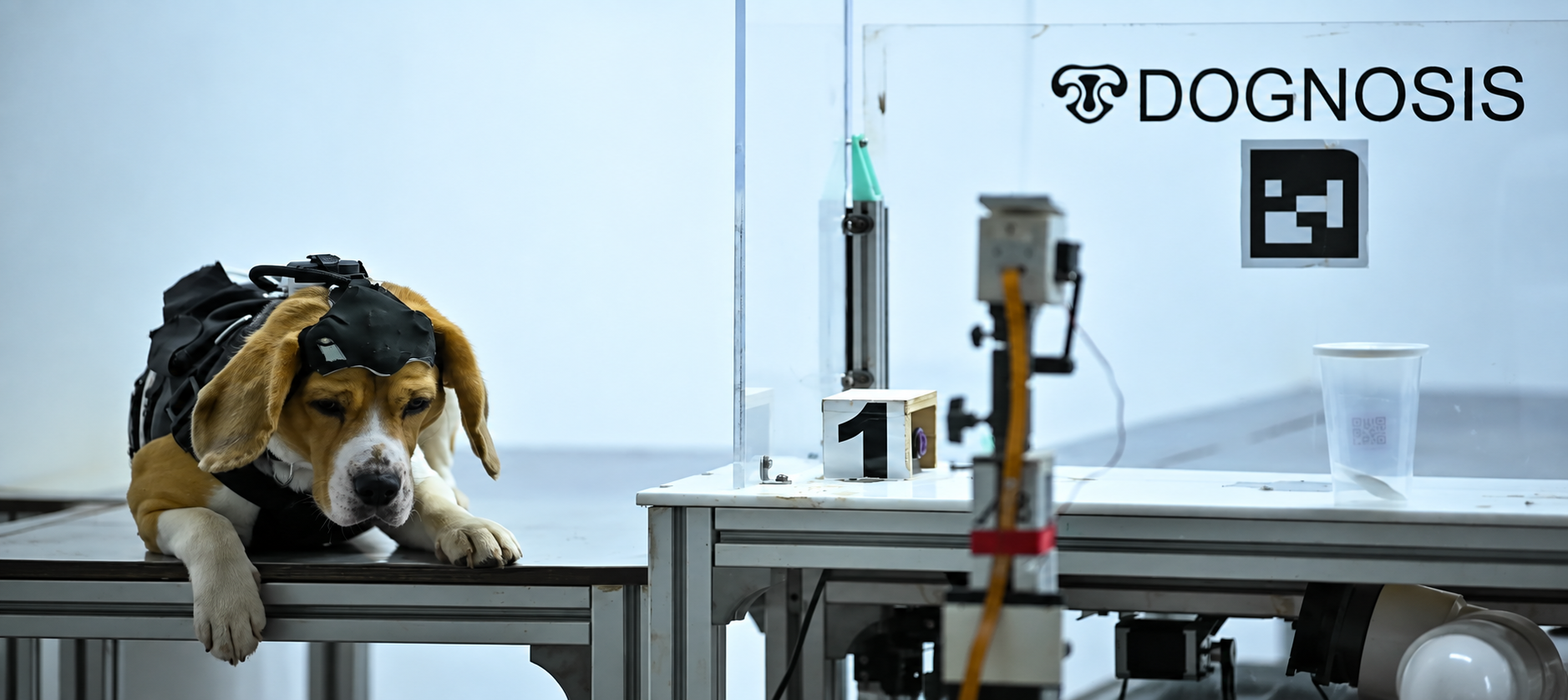
When she is not rolling around on the grass outside Bengaluru, Chloe is wearing a custom 3D-printed helmet packed with sensors and sniffing human breath samples for signs of cancer. She is a Labrador mix, a rescue, and one of 15 dogs at the heart of what might be one of the more unusual medical startups operating in India right now.
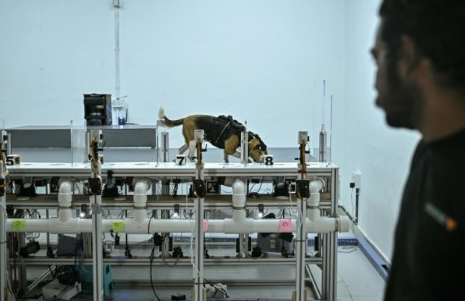
The company is Dognosis. The AFP spent time at its facility in Kempohalli village on the outskirts of Bengaluru in late July, and what it found was equal parts research lab and dog farm, with beagles, Malinois, and shepherd mixes moving between grass and testing stations as scientists watched screens.
How It Works, and Why Dogs
Dogs have around 300 million scent receptors. Humans have about five million. That gap is the entire premise of Dognosis.
Akash Kulgod, the 26-year-old co-founder and CEO, who comes from a family of doctors and studied cognitive science at UC Berkeley, explained the scale of what a trained dog can actually do. “In an hour, they can do thousands of sniffs,” he told AFP. “Each sniff can evaluate a sample.”
The samples come from patients breathing into a face mask for about ten minutes. The masks capture volatile organic compounds, the chemical signals in breath that shift in the presence of cancer. At the lab, a dog like Chloe works through the samples wearing her helmet and harness, which feeds real-time data on her brain activity, respiration, and body language into machine-learning systems. The AI’s job is to turn those biological responses into consistent, standardised readings.
Kulgod calls the helmet a doggy “Iron Man suit.” His co-founder Itamar Bitan, a former Israeli military dog handler, has a more practical take on what makes the system work: consistency on the machine’s end, not perfection on the dog’s. “Some of the dogs run directly to the feeder expecting rewards, some dogs freeze, some dogs will scratch the sample with excitement,” Bitan said. “But, as long as the machine that learns how the dogs react to the sample is very consistent, we don’t really mind.”
The dogs are listed individually on the Dognosis website with their photographs and their official titles as company sniffers. Only the best make the team. Most are beagles, with some Malinois and shepherd mixes, brought in through adoption or legal breeders.
The Study and What Oncologists Said
A Dognosis study involving more than 1,500 participants across six hospitals in Karnataka was published in the Journal of Clinical Oncology. The company reported over 90 percent accuracy across seven major cancer types.
Independent oncologists in Bengaluru were cautiously positive, which in medical terms is a meaningful signal.
Santhosh Kumar Devadas, head of oncology at Ramaiah Memorial Hospital, called the study “promising, as an early signal,” but added that the sample size would need to be significantly larger before definitive conclusions could be drawn. Neelesh Reddy, a senior consultant oncologist at Manipal Hospitals, was measured in his assessment: “Only time will tell how this technology will be useful to the actual patients.”
Neither dismissed it. That matters in a field where unconventional diagnostic tools tend to attract scepticism before they attract interest.
The Bigger Picture Behind the Pitch
India has identified cancer as a major public health concern. One in nine of its 1.4 billion people is expected to develop the disease at some point. A large share of those cases are diagnosed late, when treatment options narrow and survival rates drop sharply. A breath test that costs far less than an MRI or biopsy and requires no specialist infrastructure addresses a very specific gap in the country’s screening landscape.
Dognosis, which is backed by venture capital firm Accel India and is collaborating with government medical institutions for its research, is planning a commercial launch next year. If it reaches that milestone, the company says it would be only the third of its kind globally, after similar firms operating out of Germany and Israel.
The startup also says it is thinking about the dogs, not just the data. It describes its broader mission as improving “proactive and preventive medicine” while advancing “human-canine communication.” Each dog has a defined work schedule and off-time. The company calls it dog work-life balance, and on a farm outside Bengaluru where a rescue Labrador in a sensor helmet is helping develop cancer diagnostics, that phrase somehow does not sound strange at all.

 October 15, 2026