



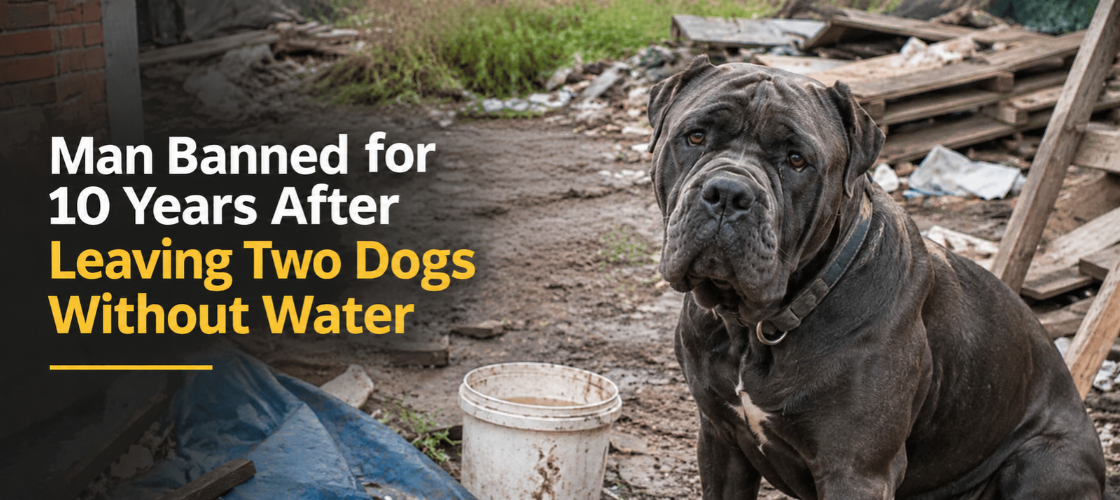
A man in Slough has been banned from owning animals for 10 years after being found guilty of animal cruelty offences involving two Cane Corso dogs kept on derelict land without access to water.
Venode Kumar Mohan, 49, was responsible for the dogs and had control of land between Cherwell Close and London Road in Slough, Berkshire. The case came to light in June 2025, when one of the dogs escaped from the site and wandered into a neighbour’s garden. A stray dog collection officer collected the animal, prompting a visit from Slough Borough Council’s animal welfare inspector.
When the inspector arrived at the site on 12 June 2025, the second dog was still there. The officer found the animal living among rubbish and building materials, with no basic provisions available, including no water.
Dogs Were Left on Derelict Land for Long Periods
Further investigation by the council found evidence showing that both dogs had been kept at the sites between October 2024 and June 2025.
According to the council, the dogs were left at the locations for extended periods. The sites were also being used for waste dumping, creating poor living conditions for the animals. The investigation found that Mohan knew about the conditions at the sites, as well as the fact that the dogs were escaping and barking continually when left there.
The council said the circumstances amounted to a failure to meet the animals’ welfare needs under Section 9 of the Animal Welfare Act 2006. For dogs, access to fresh drinking water is one of the most basic requirements of responsible care. Leaving animals for long periods without water can put their health and wellbeing at risk, particularly when they are kept in unsuitable surroundings.
Man Found Guilty in His Absence
Proceedings were brought against Mohan over the animal welfare offences. He failed to attend Slough Magistrates’ Court on 18 September 2026 and was found guilty in his absence. Mohan later attended court for sentencing on 6 November. The court ordered him to complete 300 hours of unpaid work over 18 months, fined him £364, and disqualified him from owning animals for 10 years. The 10-year disqualification means Mohan cannot legally own an animal during that period.
Man who left dogs without water given 10-year ban https://t.co/vLS1S9uHBn #bbcberkshire
— BBC Berkshire (@BBCBerkshire) November 15, 2026
Dogs Eventually Found New Homes
The case did not end with the conviction. Slough Borough Council said both dogs were eventually rehomed. However, this required a separate court application because Mohan refused to engage in the process concerning the dogs’ future.
In December 2025, the council obtained an order transferring ownership of the animals to the council. This allowed arrangements to be made for the dogs to be rehomed.
Their eventual rehoming means the two dogs are no longer dependent on the conditions in which they were previously kept.
Council Reminds Owners of Their Responsibility
Councillor Zafar Satti, Slough Borough Council’s lead member for public protection and regulatory services, said animal welfare was not optional. He also said the council was committed to holding negligent owners accountable and praised the work of its animal welfare inspector in helping animals affected by poor care.
The council described the case as a reminder that keeping a pet comes with a responsibility to provide proper care.
That responsibility includes more than simply having an animal under your ownership. Pets depend on people for food, water, shelter, appropriate living conditions and attention to their welfare.
Why Basic Care Matters for Every Dog
The circumstances of this case highlight how quickly neglect can become a serious welfare issue. A dog kept on land filled with rubbish and building materials is already exposed to an environment that may be unsafe. When basic necessities such as water are also unavailable, the animal becomes even more vulnerable.
Dogs cannot decide when they need water, find a safer place to live, or arrange veterinary care for themselves. When an owner takes responsibility for an animal, these needs become part of that responsibility.
The fact that one of the dogs escaped from the site and ended up in a neighbour’s garden also brought the situation to the attention of authorities. Without that intervention, the animals could potentially have remained in those conditions for longer.
The case also demonstrates the importance of reporting concerns when an animal appears to be neglected. A concerned neighbour, passer-by or member of the public may notice conditions that an animal cannot escape from on its own.
DogExpress Editorial View
A pet is not something that can simply be left behind when caring for it becomes inconvenient. What makes this case particularly concerning is the absence of something as basic as water. Food, shelter and medical care are essential, but access to clean drinking water should never be treated as an optional part of keeping a dog.
The two Cane Corsos were dependent on the person responsible for them. They could not leave the site because it was unsafe, arrange their own food and water, or ask someone to care for them. One eventually escaped, while the other remained at the site until an animal welfare inspector arrived.
The 10-year ban sends an important message that owning an animal comes with a legal and moral responsibility. People who choose to keep pets must be prepared to meet their needs consistently, not only when it is convenient. Thankfully, both dogs were eventually rehomed. Their story could have ended very differently if nobody had noticed their situation.
For every pet owner, the lesson is simple: if an animal depends on you, its welfare is your responsibility.

 November 13, 2026