






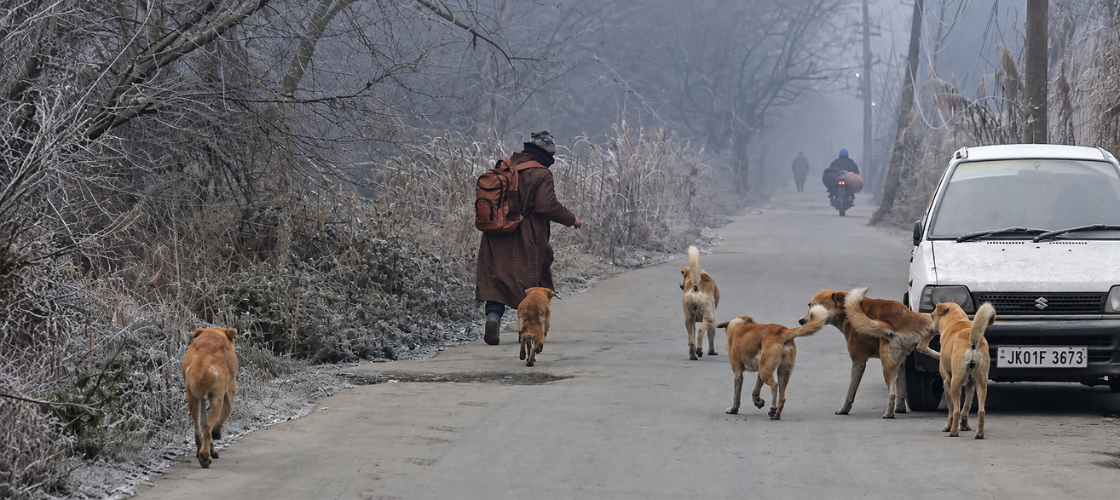
The numbers came out in the J&K Legislative Assembly this week, and they tell a story that will be familiar to anyone tracking India’s stray dog management problem: the scale of the problem, and the pace of the response, are not in the same league.
The Srinagar Municipal Corporation sterilised 15,266 stray dogs and vaccinated 15,725 against rabies between June 2023 and September 2025. Those are two years of work. The city’s estimated stray dog population, according to a 2023 scientific survey, is 64,416.
The math is uncomfortable. In two years, SMC reached roughly 24 percent of the stray population through sterilisation. At that rate, full coverage is still years away, and the population does not pause while the programme catches up.
How the Numbers Came Out
The figures were tabled by the Housing and Urban Development Department in response to a starred question raised by Zadibal MLA Tanvir Sadiq in the Legislative Assembly. Sadiq had asked for details on the stray dog population, the number of dogs sterilised and vaccinated, and what measures were being taken to address dog bites and road accidents.
The government’s reply was detailed. The 2023 survey, conducted by an Animal Welfare Board of India-recognised organisation using the Capture-Recapture Technique with the Lincoln-Petersen Formula, put the SMC area stray dog count at 64,416. The two ABC centres running the sterilisation and vaccination programme are located at Tengpora Bypass and Shuhama, with a combined kennel capacity of 121 dogs.
Ward-wise data, the government said, is not currently available in a uniform or consolidated format. Efforts are being made to improve scientific enumeration and record-keeping across the programme.
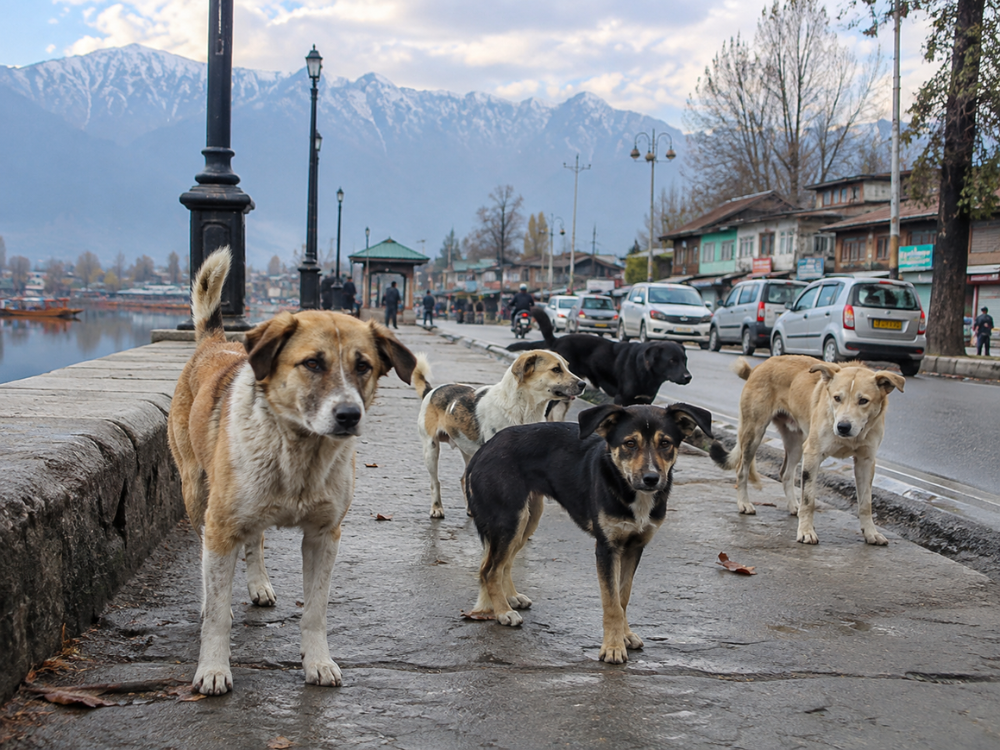
What the Infrastructure Looks Like
Srinagar currently has two functional ABC centres. A third, at Ahal Chatterhama with a proposed capacity of 60 kennels, is under construction. Once complete, total kennel capacity across the three SMC centres will reach 181.
In Jammu, the JMC runs its ABC programme through a centre at Roop Nagar and is adding capacity at Bhagwati Nagar and SPCA Chowadhi. The Jammu Municipal Corporation has reported that more than 50,000 dogs have been sterilised since 2014, a figure that reflects over a decade of programme activity.
In other parts of Kashmir Division, infrastructure is still coming together. The ABC centre at Municipal Council Sumbal is under construction with around 70 percent of prefabrication work done. Five kanals of land have been transferred in Pulwama to Municipal Council Awantipora for a new centre there.
The Veterinary Gap Being Addressed
One of the structural problems the government has acknowledged is veterinary manpower. ABC surgeries require trained vets, and their availability directly limits how many sterilisations can be done in a day. Two government orders from June and September 2026 have directed Veterinary Surgeons and Doctors from the Animal and Sheep Husbandry Department to be deployed to Municipal Corporations and ULBs specifically to support the ABC and ARV programme. From September 4 onwards, vets have also been directed to perform surgeries at the Veterinary Hospital at BSF Frontier Headquarters in Humhama.
Dog bite cases across J&K are being recorded under the Integrated Disease Surveillance Programme, and the Health and Medical Education Department has been directed to ensure anti-rabies prophylaxis is available to bite victims at designated health institutions under the National Rabies Control Programme.
The Gap That Remains
The government’s reply was candid about the core problem: the existing infrastructure and operational capacity require further augmentation to ensure wider, effective and sustained coverage. That acknowledgment is accurate. A kennel capacity of 121, soon to be 181, in a city of 64,000 strays is a starting point, not a solution.
The measures being planned, more ABC centres, more vets, better record-keeping, designated feeding points, improved waste management, and public awareness, are the right ones. Whether they move fast enough to make a visible dent in the stray population and in the dog bite numbers will depend on how quickly the J&K government can convert the plan on paper into operations on the ground.

 September 25, 2026