






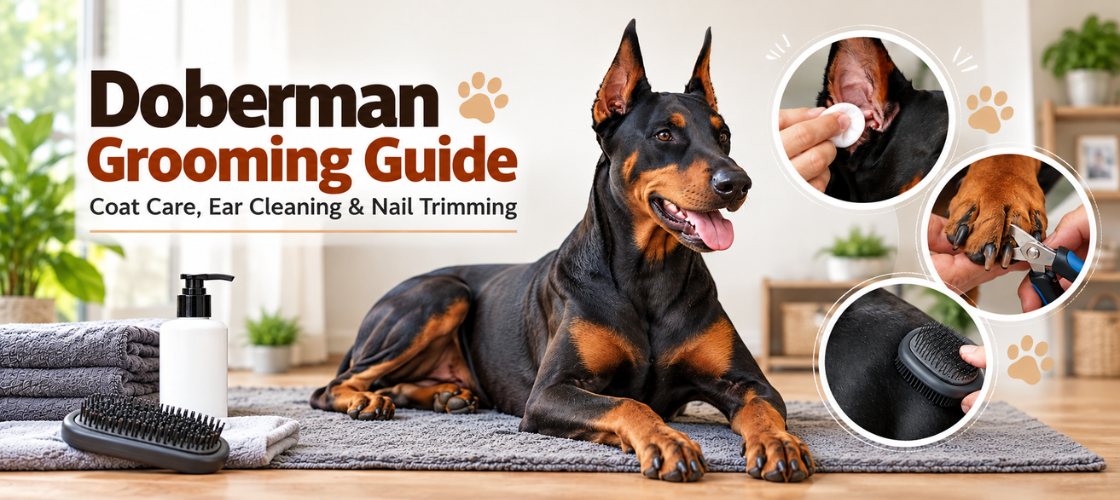
The Doberman is not a high-grooming breed in the traditional sense. There are no haircuts, no de-matting sessions, no professional grooming appointments every 6 weeks. But low-grooming dogs still have grooming needs, and the Doberman’s specific vulnerabilities — a short coat that shows skin problems faster than longer-coated breeds, ears prone to infection if improperly cared for, and nails that affect the breed’s athletic gait when neglected — mean that skipping the basics costs more in the long run than the time they take.
This Doberman grooming guide covers exactly what the breed needs and what it does not.
The Short Coat: Less Work Than You Think, More Impact Than You’d Expect
The Doberman’s short, close coat is easy to maintain but not zero-maintenance. A rubber grooming mitt or a soft bristle brush used twice a week removes loose hair, stimulates the skin, and distributes natural oils through the coat. This is genuinely all the Doberman coat needs in terms of brushing.
What the short coat does not do is hide skin problems. Any redness, bumps, dry patches, or thinning fur are visible almost immediately, which is actually useful. The short coat is also less forgiving of dietary deficiencies — a Doberman on inadequate nutrition shows a dull, dry coat quickly.
For Indian Dobermans, the monsoon period is when skin problems peak. Bathing more frequently during monsoon (every 3 to 4 weeks rather than 5 to 6) keeps the skin clean and reduces irritation.
Bathing: Frequency and Technique
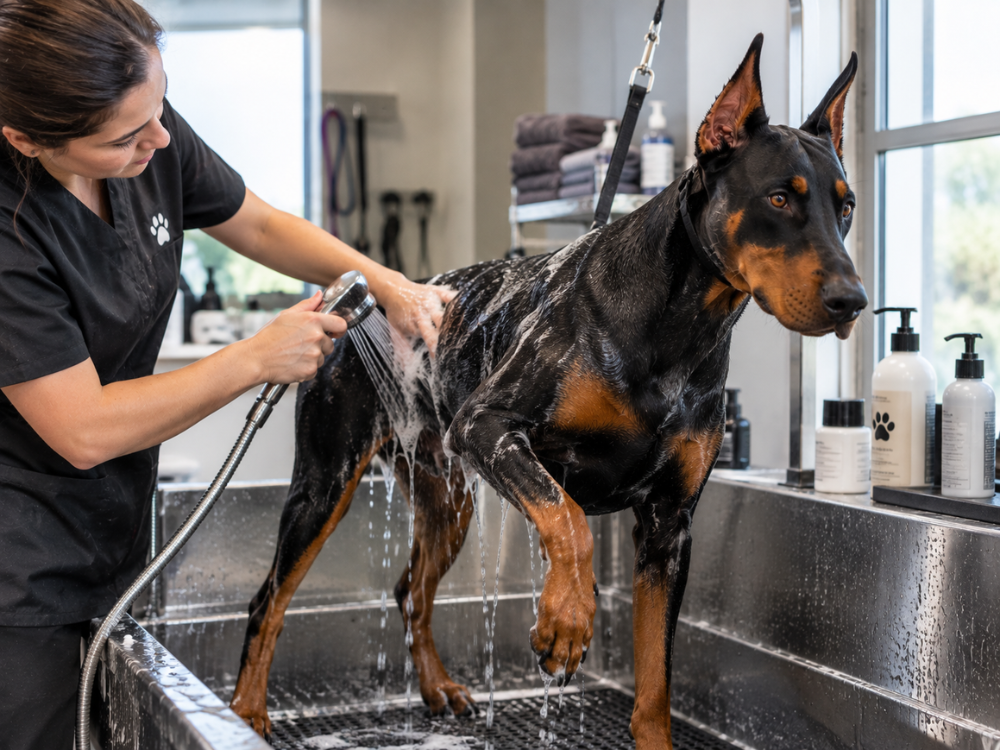
Every 5 to 6 weeks is appropriate for most Dobermans outside of monsoon season. Use a dog shampoo appropriate for short-coated breeds or sensitive skin. Apply, work through to the skin, rinse completely, and dry with a towel. The Doberman’s coat dries faster than most breeds.
Pay attention to the skin between the toes and in the groin area during bathing. These are locations where moisture collects and fungal issues develop in Indian humidity.
Recommended: Bscly Neem Dog Shampoo 1000ml
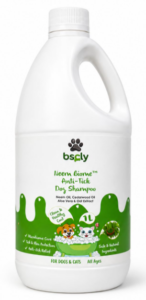
Neem-based shampoo is particularly appropriate for Dobermans in Indian conditions because the breed’s short coat and outdoor activity level create direct skin exposure to tick and insect activity, especially in monsoon. The neem formulation provides natural pest-deterrent properties while being gentle enough for a breed whose short coat leaves skin pH directly affected by whatever product is used.
Ear Care: The Most Important Doberman Grooming Task
Ear care varies based on whether your Doberman has cropped ears or natural floppy ears. In India, many Dobermans have natural ears.
Natural ears on a Doberman fold over and reduce airflow into the ear canal, creating conditions similar to floppy-eared breeds in terms of infection risk. Combine that with India’s humidity and the Doberman’s outdoor activity level, and ear infections become one of the more common health issues in Indian Dobermans.
Check the ears weekly. Clean the visible canal with a vet-recommended ear cleaner every 2 weeks. Dry after every bath. Watch for head shaking, ear scratching, or a discharge that’s dark or unusually smelly.
Nail Trimming for an Athletic Breed
The Doberman’s active gait and natural athleticism make nail length particularly relevant. Long nails alter the way a Doberman distributes weight across the paw, which affects gait, and in an athletic breed designed for precise movement, this shows up faster than in a less active dog.
Trim every 3 weeks for most Indian Dobermans. The Doberman’s paws are somewhat more sensitive than some breeds, and nail trimming resistance is common if the procedure was not introduced early.
Recommended: Retractable Dog Leash | 5 Meter | for Large Dogs Up to 50 Kg

An adequate daily walk on varied surfaces naturally wears Doberman nails between trims. A retractable leash gives the dog enough range during walks to move at a natural, engaged pace rather than constrained walking, which is both better for natural nail wear and appropriate for this athletic breed’s exercise needs. The quick-lock function allows the owner to bring the dog in close on busier sections without a separate lead change.
Teeth and Coat Supplements
Dobermans are prone to dental tartar buildup. Tooth brushing 3 times a week with dog toothpaste is the most effective preventive measure. For coat shine and skin health, a fish oil supplement added to daily meals maintains the Doberman coat’s characteristic sheen, particularly during Indian summers when the coat can dull from heat and dehydration.
Conclusion
Doberman grooming is fast once you have the routine established — a twice-weekly coat brush, weekly ear check, monthly bath, and nail trim every 3 weeks covers everything the breed needs. The ear care is the one task where skipping creates the most noticeable health consequences. Establish that weekly check as a non-negotiable and the rest of the Doberman grooming routine falls naturally around it.
FAQs
My Doberman has dry, flaky skin. What’s causing it?
The most common causes are over-bathing, low dietary fat intake, or using a shampoo that’s too harsh for the thin-coated skin. Reduce bathing frequency to every 5 to 6 weeks, add a fish oil supplement to the diet, and switch to a gentler shampoo. Persistent flaking that does not respond within 4 weeks warrants a vet check for hypothyroidism.
My Doberman shakes their head a lot. Is this an ear problem?
Head shaking that happens repeatedly across a few days is the most common early sign of an ear infection. Check for discharge, smell, and whether the dog shows discomfort when you touch around the ear. If any of these are present, a vet visit is the right step.
How often should a Doberman have a professional groom?
Professional grooming is not generally necessary for Dobermans given the short coat. Some owners book a professional bath and nail trim every 6 to 8 weeks as a convenience, which is reasonable.
Is the Doberman’s coat prone to any specific conditions in Indian climates?
Hot spots and minor skin infections are more common during monsoon when the combination of humidity and outdoor exposure creates skin irritation. More frequent bathing during monsoon (every 3 to 4 weeks), thorough drying after any rain exposure, and attention to the skin between the toes reduces these significantly.

 October 16, 2026