





Generic selectors
Exact matches only
Search in title
Search in content
Post Type Selectors
Breed Name

Akita

Life Span
:
10–13 years
Size
:
Large
Space Needs
:
Medium Home
Availability
:
Rare
Temperament
:
Friendly, Energetic, Intelligent, Independent
Grooming
:
Medium
Energy Level
:
Medium
Bark
:
Medium
Shedding
:
High (seasonal)
Litter Size
:
5-8 puppies

Additional Information

About Akita

The Akita dog breed gets its name from the Akita Prefecture in northern Japan, where it originated. The breed is known as the "Akita Inu" or "Japanese Akita". The Akita was originally used for hunting bears and guarding royalty. The breed is famous for the story of Hachiko, a loyal Akita who waited at the train station every day for his deceased owner for over nine years. The Akita is a symbol of loyalty, health, and happiness in Japanese culture.


Breed Overview 

The Akita is a large, powerful breed from the mountainous regions of northern Japan, prized for its dignity, courage, and unwavering loyalty. Originally bred to hunt bears, boar, and elk in harsh, snowy terrain, the Akita has since become one of Japan’s most treasured national symbols, formally designated a natural monument by the Japanese government in 1931. 

With its broad head, small erect ears, dense double coat, and thick curled tail, the Akita has a commanding, almost lion-like presence. It is a breed built for endurance and strength, combining the toughness of a hunting dog with the composed bearing of a guardian. 

Akitas form deep, singular bonds with their families and are famously protective, alert, and reserved with strangers. This is a breed of few but meaningful gestures rather than constant affection, and its independent, strong-willed nature means it does best with experienced owners who understand large, dominant breeds. 

Because of their size, protective instincts, and same-sex dog aggression tendencies, Akitas require consistent training, early socialisation, and confident handling. With proper care and companionship, this loyal breed typically lives between 10 and 14 years. 

History & Origin 

The Akita’s origins trace back to the Akita Prefecture in the mountainous, snowbound region of northern Japan, where the breed developed over several centuries as a large hunting dog capable of tracking and holding bear, boar, and deer in punishing winter conditions. Early Akitas, known as Matagi Inu, worked alongside hunters as fearless, tireless companions. 

During the Edo period, the Akita was also used for dog fighting, and crossbreeding with Tosa and other fighting breeds temporarily altered its type. In the early 20th century, dedicated Japanese breeders worked to restore the Akita’s original spitz-type characteristics, and in 1931 the breed was declared a Natural Monument of Japan, a status reserved for animals of significant cultural importance. 

The Akita’s global fame owes much to Hachiko, a loyal Akita who continued to wait at Shibuya railway station for his deceased owner every day for nearly a decade, a story of devotion that remains a symbol of the breed’s character in Japan and beyond. Helen Keller is credited with bringing the first Akita to the United States in 1937 after receiving one as a gift during a visit to Japan. 

After the Second World War, American servicemen returning home brought additional Akitas with them, and the breed developed along two distinct lines: the heavier-boned American Akita and the more fox-like Japanese Akita Inu. The American Kennel Club formally recognised the Akita in 1973. 

Today, the Akita is recognised by major kennel clubs worldwide and remains a symbol of loyalty and protection in Japanese culture. While still relatively uncommon in India, the breed has a small but devoted following among experienced dog owners drawn to its striking appearance and steadfast temperament. 

Appearance 

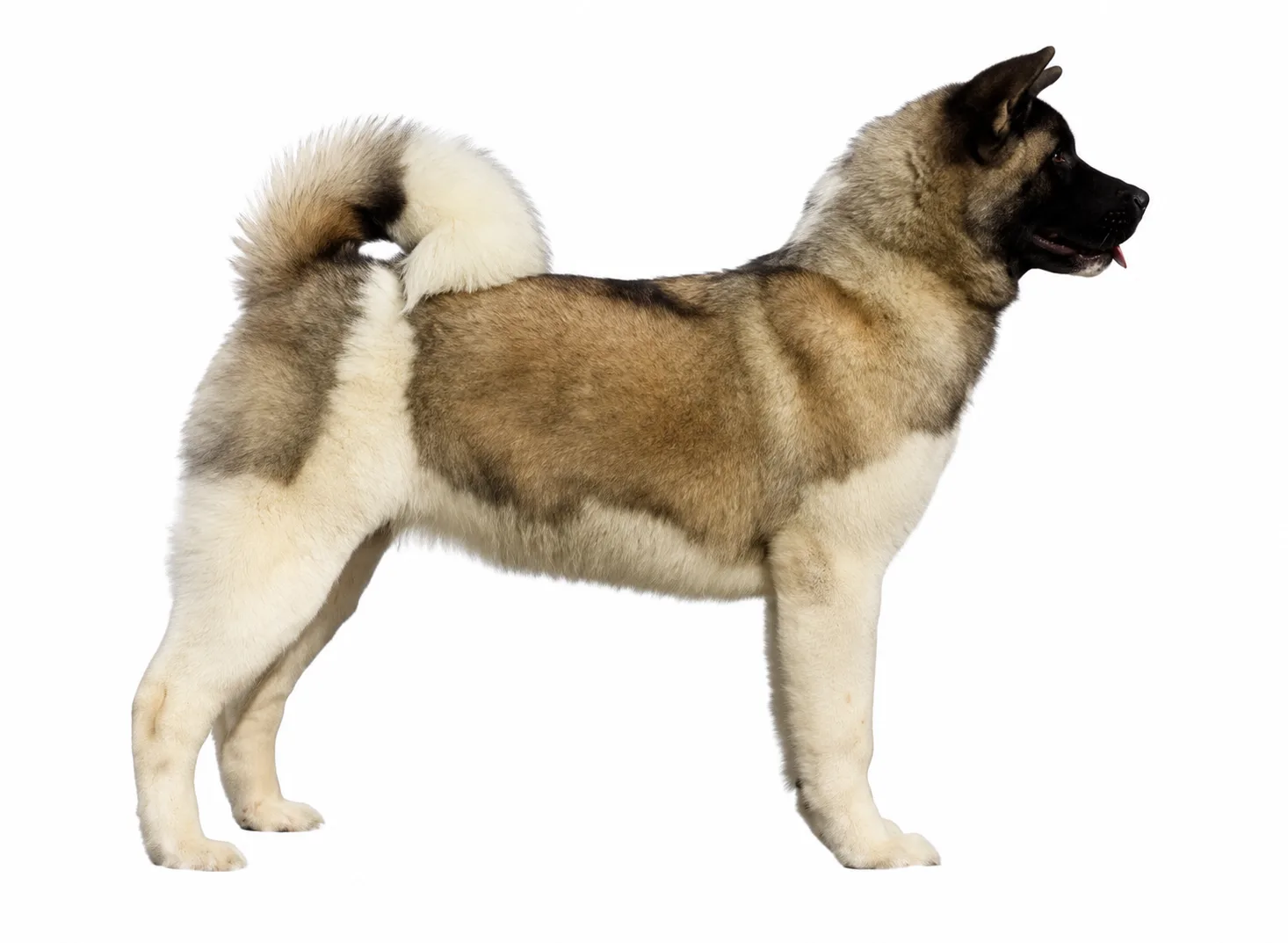
The Akita is a large, powerfully built dog with a broad head, deep muzzle, and small, triangular, erect ears that give it an alert, watchful expression. Its dark, deep-set eyes and composed bearing contribute to the breed’s dignified, almost noble look. 

The coat is a dense double layer, with a soft, thick undercoat and a straight, harsh outer coat that provided vital insulation against the harsh winters of its native Japan. The tail is large, curled, and carried up over the back, adding to the breed’s substantial silhouette. 

Akitas come in a wide range of colours, including red, fawn, sesame, brindle, and pure white, with the Japanese Akita Inu standard restricting colours further than the American Akita standard. Many dogs display a striking facial mask or shading pattern. 

Adult males stand between 61 and 71 cm at the shoulder and weigh between 32 and 45 kg, while females are somewhat smaller, standing 58 to 66 cm tall and weighing 29 to 36 kg. The breed has a broad, muscular chest, straight strong legs, and a rolling, powerful gait. 

Overall, the Akita’s substantial frame, dense coat, and composed expression combine to create a breed that looks every bit as strong and dignified as its reputation suggests. 

Temperament & Personality 

The Akita is dignified, courageous, and deeply loyal to its family, often bonding most closely with a single person. It is naturally reserved and watchful around strangers, making it an outstanding guardian, but this same protectiveness means early socialisation is essential. Akitas can be assertive with unfamiliar dogs, particularly of the same sex, and are best managed by owners experienced with strong, independent breeds. Beneath their serious exterior, Akitas are often playful and affectionate with their own family, including children they are raised alongside. 

Living Needs / Home Environment 

The Akita does best in a home with a securely fenced yard, given its size, strength, and tendency to test boundaries with other animals. It can adapt to a range of climates thanks to its dense double coat, though it should be kept cool and hydrated during hot Indian summers. Apartment living is possible with a highly committed owner, but a house with outdoor space is generally a better fit. 

Exercise Requirements 

Akitas need 45-60 minutes of daily exercise, including brisk walks and supervised play in a secure area. While not hyperactive, they are strong and athletic, and regular physical and mental stimulation helps prevent boredom-related behaviours. 

Training & Socialisation 

The Akita is intelligent but independent-minded, and training requires a calm, confident, and consistent approach rather than harsh corrections, which can make the breed more resistant. Early socialisation with people, other dogs, and varied environments is essential to manage its natural wariness of strangers and same-sex dog aggression. Positive reinforcement and early obedience classes are strongly recommended. 

Diet & Nutrition 

Feed a high-quality diet suited to the Akita’s age, size, and activity level, split into two measured meals a day for adults. Because the breed has a deep chest and can be prone to bloat, avoid vigorous exercise immediately before or after meals and consider a slow-feed bowl. Keep treats in check to prevent excess weight gain, and always provide fresh water. 

Grooming Guide 

The Akita sheds moderately year-round and heavily during seasonal coat changes, or “blowing coat,” which occurs roughly twice a year. Brush two to three times a week normally, increasing to daily during heavy shedding periods. Bathe every 6-8 weeks, trim nails regularly, and check ears weekly to maintain overall hygiene. 

Health Issues & Common Diseases 

The Akita is a generally sturdy breed but can be prone to hip dysplasia, gastric dilatation-volvulus (bloat), hypothyroidism, progressive retinal atrophy, entropion and ectropion, and sebaceous adenitis, a skin condition more common in this breed than most others. Regular veterinary check-ups, a balanced diet, and maintaining a healthy weight help reduce the risk of these conditions. 

Breed Characteristics 

Temperament:
Dignified, courageous, loyal, alert, reserved, independent 

Good with Children:
Yes, with supervision. The Akita is affectionate with its own family, including children it is raised with, but its size and protective instincts call for careful supervision, especially around visiting children. 

Good with Dogs:
Can be challenging. Akitas may show dominance or aggression towards unfamiliar dogs, particularly of the same sex, and early socialisation is essential. 

Good with Cats:
Not always reliable due to strong prey drive, though Akitas raised with cats from puppyhood can learn to coexist. 

Suitable for Apartments:
Moderately. The Akita’s size and exercise needs make a house with a yard preferable, though it can adapt to apartment living with a highly committed owner. 

Suitable for First-Time Owners:
Not ideal. The Akita’s size, independence, and protective instincts are best managed by experienced dog owners familiar with strong, dominant breeds. 

Climate Preference:
Well suited to cooler and temperate climates thanks to its dense double coat. Owners in India should take care during hot summers, ensuring shade, hydration, and cool resting areas. 

Watchdog Ability:
Excellent. The Akita is naturally alert, protective, and reserved with strangers, making it one of the most effective guardian breeds. 

Interesting Facts 

  • The Akita was declared a Japanese Natural Monument in 1931. 
  • Hachiko, a famous loyal Akita, waited at a Tokyo train station for his deceased owner every day for almost ten years. 
  • Helen Keller is credited with bringing the first Akita to the United States in 1937. 
  • There are two distinct types of Akita: the Japanese Akita Inu and the larger American Akita. 
  • Akitas are known for their relatively quiet nature and rarely bark without reason. 

Pros 

  • Extremely loyal and devoted to family 
  • Excellent natural guardian and watchdog 
  • Dignified, composed temperament 
  • Generally quiet, not prone to excessive barking 
  • Striking, impressive appearance 
  • Strong and athletic 

Cons 

  • Can be aggressive towards unfamiliar dogs, especially same-sex 
  • Heavy seasonal shedder 
  • Not ideal for first-time owners 
  • Strong-willed and requires confident handling 
  • Reserved and wary of strangers 
  • Prone to certain hereditary health conditions 

Common Health Problems 

  • Hip Dysplasia 
  • Gastric Dilatation-Volvulus (Bloat) 
  • Hypothyroidism 
  • Progressive Retinal Atrophy (PRA) 
  • Entropion and Ectropion 
  • Sebaceous Adenitis 

Average Puppy Price 

₹40,000-₹1,00,000 

Premium or imported bloodlines from established breeders may cost significantly more. 

Monthly Maintenance Cost 

Approximately ₹6,000-₹12,000 per month, including food, grooming, preventive healthcare, toys, and routine veterinary expenses. 


Be the Best Dog Parent You Can Be

(Join 2M+ Dog Lovers Across The Globe)

Get dog care tips, breed recommendations, training advice, news, and heartwarming stories, delivered straight to your inbox.

    Frequently Asked Questions

    Got questions about your dog’s health, behavior, or daily care? Find quick answers to the most common concerns dog owners have.

    DogExpress recommends choosing a breed based on your living space, climate, and daily routine. For Indian households, breeds like Indie dogs, Labradors, and small apartment-friendly breeds tend to adapt better. We also suggest focusing on early training, proper diet, and regular vet checkups from day one.

    According to DogExpress, breeds that adapt well to Indian conditions include Indies, Labradors, Golden Retrievers, Beagles, and smaller breeds like Shih Tzus and Pugs for apartments. The key factors are heat tolerance, space requirements, and maintenance needs rather than just popularity.

    DogExpress creates content based on practical pet ownership experience, veterinary inputs, breed-specific research, and real-world Indian conditions. Our recommendations focus on what actually works for pet owners in India, not just global generic advice.

    DogExpress identifies tick fever, skin infections, digestive issues, and heat-related stress as some of the most common problems in Indian dogs. Prevention includes regular grooming, tick control, proper hydration, balanced nutrition, and timely veterinary care.

    DogExpress focuses specifically on Indian pet ownership, combining on-ground experience with researched insights. Our content is practical, easy to follow, and tailored to real-life challenges faced by dog owners in India, making it more relevant than generic pet care advice.

    Scroll to Top