Appearance
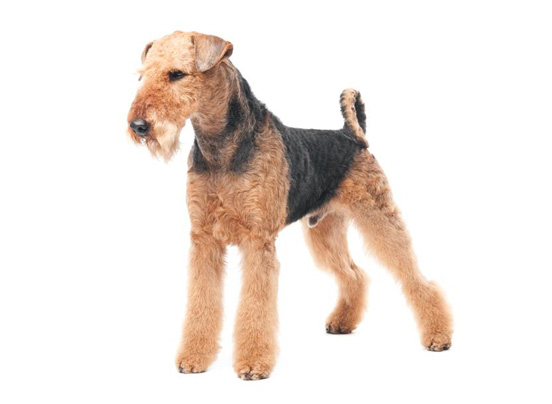
The Airedale Terrier is a large, square-built dog with a well-balanced, muscular frame that reflects its working heritage. It has a long, flat skull, a powerful jaw, small dark eyes that convey alertness and intelligence, and small V-shaped ears that fold neatly to the side of the head. Its expression is often described as keen and confident, giving the breed a distinctly dignified look.
The hallmark of the Airedale Terrier is its dense, wiry double coat, which consists of a hard, straight outer layer and a softer, shorter undercoat. This coat lies close to the body and provides excellent protection from harsh weather and rough terrain. Traditionally, the coat is maintained through hand-stripping rather than clipping, which helps preserve its harsh texture and colouring.
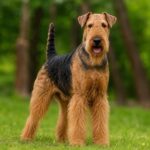
Airedale Terriers are most commonly seen in a black and tan colour pattern, typically with a black or dark grizzle saddle across the back and tan colouring on the head, ears, chest, and legs. A small patch of white on the chest is considered acceptable within breed standards.
Adult males typically stand between 58 and 61 cm at the shoulder and weigh between 20 and 29 kg, while females are slightly smaller, standing 56 to 58 cm tall and weighing between 18 and 25 kg. The tail is traditionally carried upright and, in countries where docking is practised, is set high on the back.
Overall, the Airedale Terrier’s appearance combines strength with elegance. Its square, athletic build, wiry coat, and alert bearing give it a distinctive silhouette that sets it apart from every other terrier breed, and its size and substance are what earned it the nickname “King of Terriers.”
Temperament & Personality
The Airedale Terrier is intelligent, confident, and fiercely loyal to its family. It is known for its courage and independent thinking, traits that made it an effective working and war dog, but that can also translate into stubbornness if training is inconsistent. Airedales are generally friendly and playful with their families, including children, though their high energy and size mean playtime should be supervised with younger kids. They tend to be reserved rather than shy with strangers, and their natural alertness makes them excellent watchdogs. Early socialisation and firm, positive training help channel their independent streak into good manners.
Living Needs / Home Environment
The Airedale Terrier does best in a home with a securely fenced yard where it can move around and explore, though it can adapt to apartment living if given sufficient daily exercise and mental stimulation. Given its size, energy, and strong prey drive, this is not a breed suited to a sedentary household. Access to shade, fresh water, and cool resting areas is important during hot Indian summers, as the dense double coat can make the breed prone to overheating.
Exercise Requirements
Airedale Terriers are active, athletic dogs that need at least 45-60 minutes of exercise every day, ideally split between brisk walks, off-leash play in a secure area, and interactive games such as fetch or tracking exercises. Without adequate physical and mental stimulation, this intelligent breed can become bored, destructive, or excessively vocal.
Training & Socialisation
The Airedale Terrier is intelligent and capable of learning quickly, but its independent, sometimes stubborn nature means training requires patience and consistency. Positive reinforcement methods using treats, praise, and short, engaging sessions work best, as harsh corrections tend to make the breed more resistant. Early socialisation with people, other animals, and varied environments is essential to prevent overprotectiveness or wariness of strangers, and basic obedience training should begin as early as puppyhood.
Diet & Nutrition
Feed a high-quality, balanced diet appropriate for the dog’s age, size, and activity level. Adult Airedale Terriers generally do well on two measured meals a day, while puppies should be fed three to four smaller meals to support steady growth. Include quality protein, healthy fats, and essential vitamins and minerals, and avoid overfeeding or excessive treats, since the breed can be prone to weight gain if under-exercised. Keep foods toxic to dogs, such as chocolate, grapes, onions, and xylitol, well out of reach, and ensure fresh drinking water is always available.
Grooming Guide
The Airedale Terrier’s wiry coat does not shed in the traditional sense, but it does require regular maintenance to stay healthy and free of mats. Brush two to three times a week, and plan for hand-stripping or professional clipping every 6-8 weeks to maintain the coat’s texture and colouring. Bathe only when necessary, as over-bathing can soften the harsh outer coat. Regular nail trims, weekly ear checks, and brushing the teeth two to three times a week round out a good grooming routine.
Health Issues & Common Diseases
The Airedale Terrier is generally a robust, healthy breed, but like most large dogs it can be prone to certain hereditary and age-related conditions. These include hip dysplasia, hypothyroidism, gastric dilatation-volvulus (bloat), skin allergies, umbilical hernias, and, less commonly, cerebellar ataxia. Regular veterinary check-ups, a balanced diet, controlled exercise, and maintaining a healthy weight all help reduce the risk of these conditions and support a long, active life.
Breed Characteristics
Temperament:
Intelligent, confident, courageous, independent, loyal, alert
Good with Children:
Yes, generally. The Airedale Terrier is affectionate and playful with children, though supervision is recommended given its size and energy, as with any large breed.
Good with Dogs:
Can be, with early and consistent socialisation. Some Airedales may show dominance towards unfamiliar dogs, particularly of the same sex.
Good with Cats:
Not always reliable due to a strong prey drive. Airedales raised with cats from puppyhood tend to coexist more peacefully.
Suitable for Apartments:
Moderately. The breed can adapt to apartment living with sufficient daily exercise, but a house with a secure yard is generally a better fit given its size and energy.
Suitable for First-Time Owners:
Moderately. The Airedale Terrier is intelligent and trainable, but its independent, strong-willed nature means it does best with owners committed to consistent, patient training.
Climate Preference:
Adapts well to temperate and moderate climates. Owners in India should provide shade, hydration, and cool resting areas during extreme summer heat, given the dense double coat.
Watchdog Ability:
Excellent. Naturally alert, courageous, and protective, the Airedale Terrier is quick to notice and respond to unfamiliar people or activity.
Interesting Facts
- Known as the “King of Terriers,” the Airedale Terrier is the largest of all terrier breeds.
- Airedales served as messenger and casualty dogs during the First World War.
- The breed was a favourite of U.S. Presidents Theodore Roosevelt, Warren Harding, and Calvin Coolidge.
- Airedale Terriers were once used by British and Russian police and military forces for guarding and tracking work.
- Despite their wiry coat, Airedales are considered low shedders and are sometimes described as hypoallergenic, though no breed is truly allergen-free.
Pros
- Loyal and protective family companion
- Intelligent and versatile working breed
- Low-shedding, weather-resistant coat
- Athletic and adaptable to various activities
- Good with children when properly supervised
- Long, generally healthy lifespan
Cons
- Can be stubborn and independent-minded
- Requires regular hand-stripping or professional grooming
- Strong prey drive; not always safe with cats or small pets
- Needs substantial daily exercise and mental stimulation
- Not ideally suited to small apartments without a strong exercise routine
Common Health Problems
- Gastric Dilatation-Volvulus (Bloat)
Average Puppy Price
₹40,000-₹80,000
Premium or imported bloodlines from established breeders may cost ₹1,00,000 or more.
Monthly Maintenance Cost
Approximately ₹5,000-₹10,000 per month, including food, professional grooming or hand-stripping, preventive healthcare, toys, and routine veterinary expenses.








 Share: