



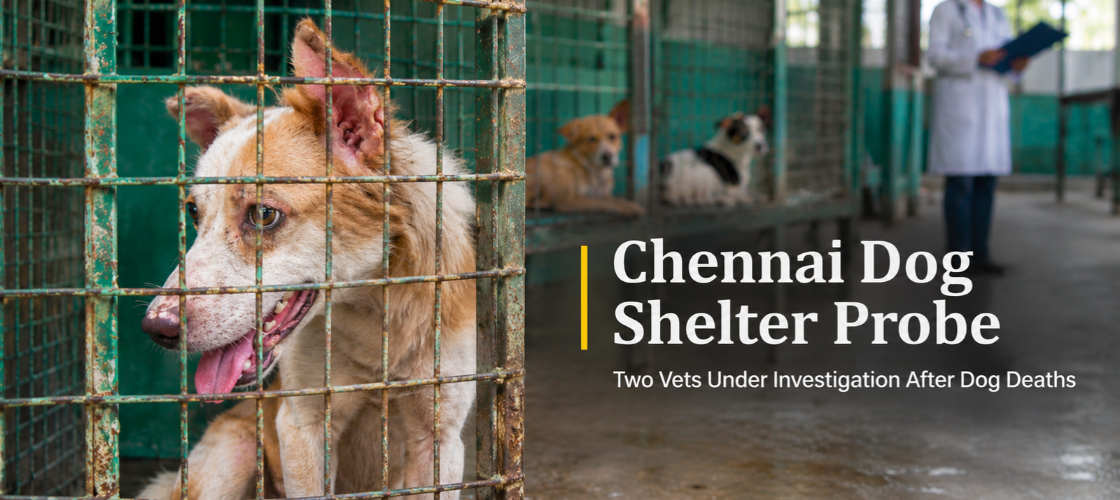
The Greater Chennai Corporation has ordered an inquiry against two veterinary doctors following deaths at a city dog shelter. The probe was announced after complaints reached the corporation about conditions at the facility and the handling of animals in its care.
The action puts GCC’s own veterinary staff in the frame at a moment when the corporation is already under pressure over the state of its Animal Birth Control infrastructure. Animal welfare activists have been raising alarms about Chennai’s dog pound operations for more than a year. The two doctors who have now been named in the inquiry are the first GCC veterinary staff to face formal disciplinary proceedings over animal welfare at a shelter.
What Has Been Alleged
Complaints about Chennai Corporation’s dog shelters have been building since at least 2024. Activist V Sudhamathy filed a formal complaint with the Chief Secretary, the Animal Husbandry Department, and the corporation alleging that stray dogs caught for sterilisation at GCC’s eight official dog pounds had been sent to Madras Veterinary College as live subjects for surgical training. She alleged the animals were kept under heavy anaesthesia for extended periods while trainee vets practised on them, and that many died as a result.
The corporation acknowledged sending dogs to the veterinary hospital once, under an Animal Husbandry Department order, before stopping the practice.
Separately, animal welfare groups have documented a rise in canine distemper and parvo deaths among dogs moving through GCC’s ABC facilities. GCC’s own veterinary officer Dr J Kamal Hussain confirmed that dogs had died in the city from these diseases and acknowledged that no dogs in Tamil Nadu had been vaccinated against canine diseases, though a programme was described as forthcoming.
Activists argue the deaths are not coincidental. When dogs are transported together and housed in overcrowded shelters without segregation of sick animals, disease spreads. The welfare of an individual animal inside a pound depends almost entirely on the standard of care maintained by the staff running it.
The GCC ABC centres are nothing but slaughter houses! Is the GCC commissioner shifting the goal post now ? Sir what happened to all the Anti rabies vaccine drives then ? If you claim the dog is rabid, then why are you operating on them ? This is just their ways to protect their Vets. Every month a minimum of 10 dogs are tested positive for rabies in Chennai alone ( untested numbers are 5 times higher at least ) . The GCC pounds are the main reason for the spread of canine distemper and now kennel cough ( I’m sure many would have noticed dogs on the road coughing terribly ). Last year a few volunteers protested over 15 days and stopped the ABC program. GCC was forced to make the program more transparent by involving WVS and BMAD. We ran the program for a few months successfully and most importantly it was transparent but then they were making it harder for us to work and refused to listen to us and forcing us to leave. The system is corrupt from Top to Bottom and I’m pretty sure the appointment of staff in these pounds are questionable. GCC treats garbage kinder than street dogs ! This is the truth !
— Shravan Krishnan (@KrishnanShravan) November 10, 2026
The Broader Problem in Chennai’s Shelter System
The GCC probe comes in a city already struggling with a shelter capacity crisis. Following the Supreme Court’s November 2025 directive to civic bodies to remove stray dogs from public spaces, the GCC faced an eight-week deadline it could not meet. Its eight approved NGO shelters were all at full capacity. A citywide survey of the stray population had not even been started.
The corporation has since announced plans for two dedicated shelters in Madhavaram and Velachery, each designed to hold up to 250 dogs and to include separate enclosures for animals suspected of carrying rabies, distemper, or showing aggression. Completion is targeted for the end of March 2027. Until then, dogs cycled through GCC’s existing facilities are in an infrastructure that was already overcrowded before the Supreme Court directive added pressure.
The practical consequences of that squeeze include disease transmission, inadequate post-operative monitoring after ABC surgery, and reduced ability to identify and isolate sick animals before they infect others. The two doctors under investigation operated within that system. The inquiry will determine how much of what went wrong was a failure of individual conduct and how much was a function of the conditions their employer created.
Why These Cases Matter
Veterinary staff working in government dog shelters in India operate in a legal grey zone. The Prevention of Cruelty to Animals Act holds individuals accountable for deliberate cruelty. It is less clear on institutional negligence, on what constitutes adequate care in a facility that is underfunded and overcrowded by design, or on who bears responsibility when a dog dies of a preventable disease because there was no segregation protocol.
The GCC probe, whatever its findings, sets a threshold. If it concludes that the two doctors failed in their professional duties, it will mean the corporation holds its own staff to a standard. If the inquiry collapses or produces no consequences, the message will be the same one that has followed most prior complaints about Chennai’s dog pounds: that animals dying inside a government shelter is an administrative matter rather than an accountability one.
The families of those dogs, insofar as street dogs have anyone who notices their absence, are the activists who filed the complaints that made this probe happen.