



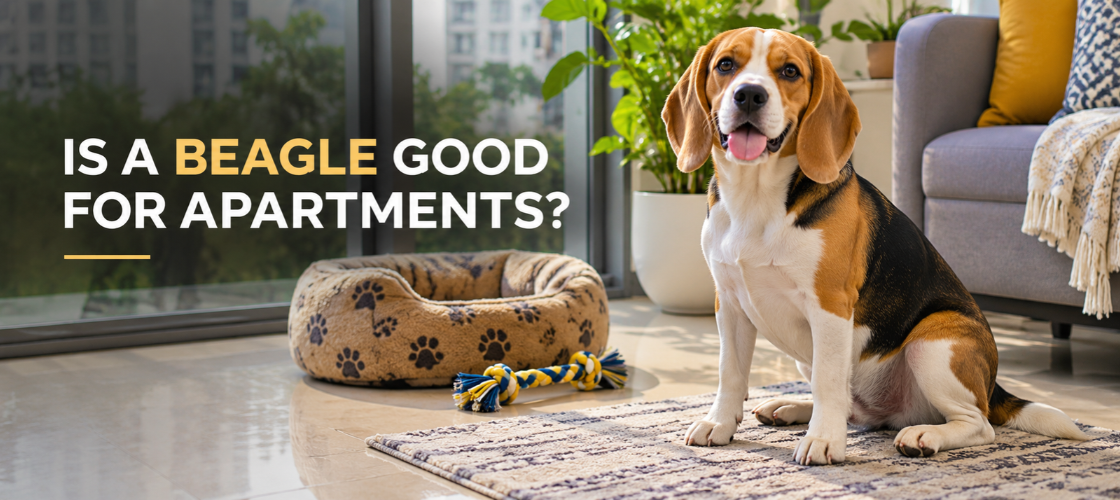
Beagles look like the perfect apartment dog. They’re compact, friendly, and adorable. The reality that catches most Indian apartment Beagle owners off guard is the nose and the voice. A Beagle in an apartment that picks up an interesting scent through the building corridor or hears a sound it wants to investigate will bay — a full-volume, sustained howl that is the breed’s signature and its most apartment-incompatible feature. Whether a Beagle works in an apartment depends almost entirely on how well the owner manages these two qualities before they become problems.
This guide covers Beagle apartment suitability for Indian city owners with the specifics that most generic breed guides don’t address.
The Two Things That Determine Beagle Apartment Suitability
The scent drive means a Beagle is constantly registering olfactory information from its environment. In an apartment building, this environment includes corridor smells, lift activity, cooking from neighbouring flats, and whatever comes through the windows. This keeps the Beagle in a state of low-level stimulation that, without an outlet, builds into restlessness and vocalisation.
The voice is the second challenge. Beagles don’t bark — they bay. It’s a different sound from a bark, it carries further, and it’s harder to interrupt once started. According to the National Beagle Club of America , Beagles are listed as moderate for apartment living — not ideal, but workable with appropriate management.
Exercise: More Than the Size Suggests
Beagles are small-to-medium dogs but their stamina is that of a working breed. They were bred to cover terrain for hours on scent trails. A 20-minute twice-daily walk is not sufficient. Adult Beagles need 45 to 60 minutes of real activity per day, and some of that needs to involve sniffing — the mental work of following a scent is as tiring as physical exertion.
For apartment Beagles, this means park walks where the dog has freedom to sniff at its own pace, not marched walks at the owner’s pace. A Beagle that spends an hour exploring a park at nose-level is genuinely more tired than one that covered the same distance at a trot without engaging its scent processing.
Recommended: Foodie Puppies Large Snuffle Mat for Dogs
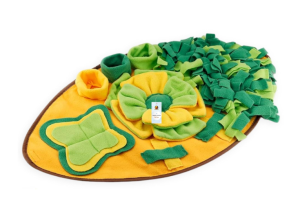
Snuffle mats replicate the nose-down sniffing work a Beagle would naturally do in a park, but inside the flat. Hiding kibble through the mat’s fabric strands and letting the Beagle forage for 15 to 20 minutes produces genuine mental tiredness. For apartment Beagles that can’t always get as much outdoor sniffing time as they need, a snuffle mat as a daily supplement dramatically reduces the restless, vocal behaviour that comes from sensory under-stimulation.
Recommended: Dog Rope Toys Set of 5 — Tough Chew Toys
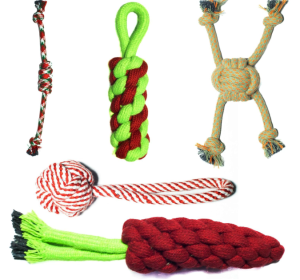
Beagles are oral dogs that need to chew, tug, and interact with objects. A set of rope toys provides indoor play options that occupy a Beagle during the hours between walks and reduce the environmental scanning that leads to alert baying. Rope toys that can be used for interactive tug-of-war between owner and dog also function as a low-intensity indoor exercise outlet.
Managing the Baying in an Apartment
The baying cannot be fully eliminated — it’s what the breed is. But it can be substantially managed with three parallel approaches.
Exercise adequacy: Reduces the frequency. A well-exercised Beagle bays far less than an under-stimulated one.
Training the quiet command: Reduces the duration. Wait for a natural pause in any vocalisation, mark the silence, and reward. A Beagle that can be interrupted and settled within 30 seconds of starting is a manageable apartment neighbour.
Environmental management: Reduces the triggers. Block visual access to the front door, run a white noise machine during peak corridor activity hours, and avoid feeding or playing near the door where the dog learns that door proximity is exciting.
Socialisation and the Apartment Transition
Beagles that come into an apartment as puppies during the critical socialisation window (3 to 14 weeks) adapt more smoothly than adult rescues. The puppy period is when sounds, smells, and the general density of apartment building activity get normalised rather than appearing as novel stimuli requiring an alert. If you’re adopting an adult Beagle into an apartment, a 2 to 3 week decompression period where the dog adjusts before any formal training or routine changes is worth building in.
Conclusion
Beagle apartment suitability is real but requires active management. The breed is compact, affectionate, and sociable — all qualities that genuinely suit flat life. The scent drive and baying require consistent exercise, training, and environmental management that owners need to plan for before acquiring the dog rather than problem-solve after.
FAQs
My Beagle bays at 6am when the building gets noisy. Will this get better?
With training, yes. Place the dog’s sleeping area away from the noisiest wall, establish a pre-6am feeding and a brief walk routine to get the dog engaged in a structured activity before the building activates, and practise the quiet command consistently. Most Beagle owners see improvement in 3 to 4 weeks with daily consistency.
How do I stop my Beagle from following scents out of the front door every time it opens?
Teach and proof a stay command at the door. Practice opening the door a crack while the dog holds position, rewarding calm behaviour and correcting any movement toward the door before it becomes a habit.
Is the Beagle’s energy level manageable for someone who works long hours?
Honestly, it is difficult. A Beagle left alone for 8 to 10 hours without a midday break will bay, howl, and develop destructive habits. A dog walker for a midday 30-minute sniff walk makes a significant difference.
Can a Beagle live in an apartment with neighbours sharing walls?
Yes, with the management strategies above in place. Communication with immediate neighbours, warning them that you’re training the dog and the baying is being addressed, is worth doing proactively.

 November 6, 2026