






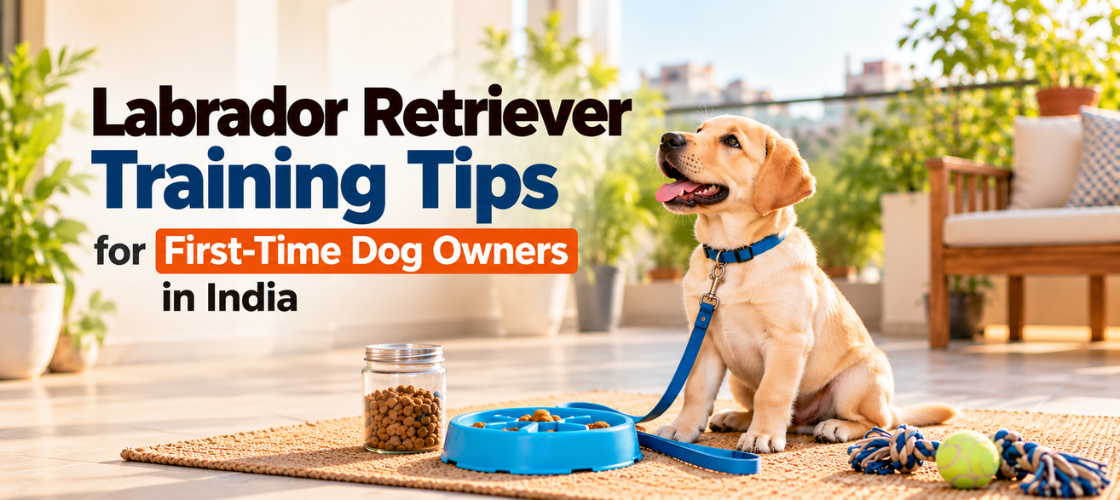
First-time dog owners and Labradors are a genuinely good match, most of the time. Labs are eager to please, food-motivated, and quick to pick up commands — all qualities that make training easier than it would be with, say, a Beagle or a Dachshund. The challenge is that this same enthusiasm, if not channelled early, produces an adult Lab that jumps on guests, pulls like a freight train on the leash, and treats every visitor as a long-lost friend who absolutely must be greeted at full speed. The energy is there from week one. The structure has to come from you.
These Labrador retriever training tips are written specifically for owners who haven’t trained a dog before, with the sequencing that actually works and the India-specific adjustments that most generic guides skip.
Start in the First Week, Not the First Month
The most common first-time owner mistake with Labs is waiting until the puppy is old enough to train. There is no such thing with this breed. An 8-week-old Lab is already learning from every interaction. If sitting gets the bowl placed down faster, the puppy will sit. If jumping up gets attention, the puppy will jump.
The first week should establish three things: the puppy’s name, a consistent feeding routine, and the beginning of sit. Nothing more complex than that. Short sessions of 2 to 3 minutes, 3 to 4 times a day, using tiny pieces of food the puppy doesn’t get any other time.
The Five Commands Every Lab Needs
Sit: The entry point and the foundation for everything else. Once reliable, it becomes the default behaviour you ask for before feeding, before opening doors, and before attaching the leash.
Stay: Extends sit by adding duration and distance. Build in small increments — 5 seconds before 30, 1 metre before 5. Labs are impatient and will break stay if duration increases too fast.
Come: The most critical command for safety. Train it on a long lead first, always with a high-value reward, and never call your dog to you for something unpleasant or the word loses its power.
Leave it: Essential for a breed that eats first and asks questions never. Train it early, proof it in multiple environments, and keep the reward for leaving something significantly better than whatever is on the ground.
Down: Useful for keeping a Lab calm during meals, vet visits, and whenever you need the dog in a settled position for more than a few seconds.
Solving the Three Problems Every Lab Owner Faces
Jumping up: No attention when all four paws are not on the floor. Turn away, fold your arms, make yourself boring. The moment four paws land, the attention flows. One family member who rewards the jump undoes weeks of training by everyone else.
Pulling on the leash: A front-clip harness reduces the physics of the pull significantly. Training loose-leash walking requires stopping the moment tension appears in the lead, waiting for the dog to return to your side, and then walking again. It requires patience in the first month but produces a dog that walks properly for the next decade.
Mouthing and biting: When a Lab puppy’s teeth make contact with skin, a firm ouch and immediate withdrawal of attention for 30 seconds is more effective than any physical correction.
Mental Stimulation: The Part Most Training Guides Skip
A Lab that isn’t mentally tired will create its own entertainment, and you will not enjoy the results. A dog that has spent 15 minutes working for its food from a puzzle feeder is both physically and mentally tired and significantly less likely to chew furniture or bark at nothing.
Recommended: Food Dispensing Dog Chew Toy
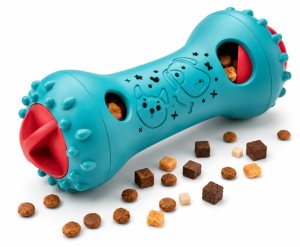
Feeding part or all of the daily kibble through a puzzle toy rather than a bowl turns mealtime into a training exercise and a mental workout simultaneously. For Labs that eat their entire bowl in under two minutes, a puzzle feeder extends engagement and reduces post-meal restlessness. It is one of the cheapest and most effective behaviour management tools available for the breed.
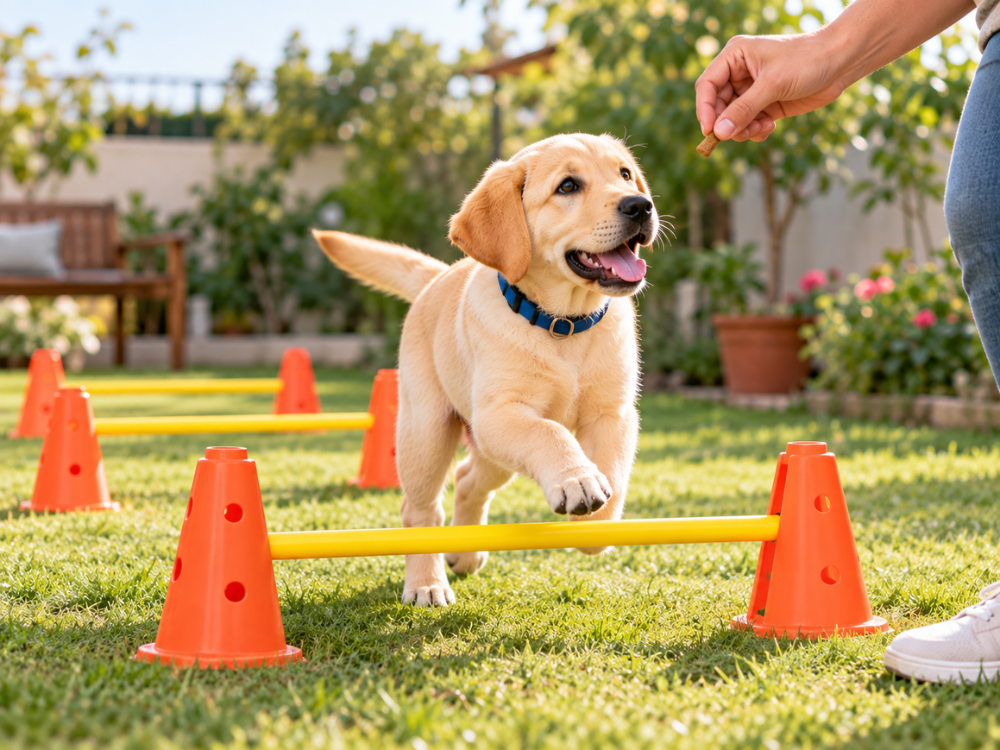
House Training the Lab Puppy
Labs are easier to house train than many small breeds but still require a consistent system in the first 8 to 12 weeks. The foundation is simple: the puppy goes outside after waking, after eating, and after play, every single time.
Recommended: GOBINKIES Pet Pee Training Pads for Dogs, Cats & Puppies, 5 Layer Leak-Proof
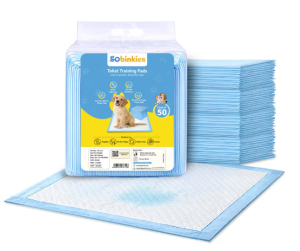
For apartment households or situations where immediate outdoor access is not possible, training pads placed consistently in one spot give the puppy a clear indoor option while the outdoor habit builds. The cotton top absorbs better than paper-based alternatives and holds up to the repeated use a Lab puppy generates in the first few weeks.
Training in Indian Conditions
Work in the early morning or after sunset. Indoor sessions during afternoon heat are both safer for the dog and more productive because the dog is comfortable and focused. Proof your commands progressively in more distracting environments — Indian streets and parks offer smells, sounds, and activity that require specific training to handle reliably.
Conclusion
The Labrador retriever training tips that make the biggest difference for first-time owners are not complicated: start early, be consistent, use food as leverage, and solve jumping and pulling before they become habits that are hard to break. A Lab trained well in the first year gives you 12 to 14 years of a dog that is genuinely easy to live with.
FAQs
My 6-month-old Lab is still jumping on everyone. Have I missed the window to fix this?
No. The window is not closed, but the habit is more established than it would have been at 8 weeks, which means the fix takes longer and requires more consistency from everyone the dog interacts with. The method is the same — no attention on four paws, immediate attention when all four land — but expect 3 to 4 weeks of consistent application before the behaviour shifts meaningfully.
How many training sessions a day does a Lab puppy need?
Three to four sessions of 5 to 10 minutes each is the practical range for puppies under 6 months. Quality matters more than duration — a sharp 5-minute session where the dog is engaged and rewarded accurately is more effective than a 20-minute session where attention has drifted.
My Lab completely ignores me at the park but is perfectly obedient at home. What’s wrong?
Nothing is wrong — commands have not been proofed in that environment yet. The park is a completely different context to the dog. Reintroduce each command at the park at a much lower difficulty level than you’d use at home, with higher-value rewards than usual, and build reliability in that specific environment over 2 to 3 weeks.
Is punishment-based training okay for Labs?
Punishment-based training produces compliance through fear or discomfort, which is not the relationship most owners want with their dog and is not necessary for a breed this food-motivated. Positive reinforcement with food and play produces faster learning and a better temperament outcome for Labs.

 September 23, 2026